

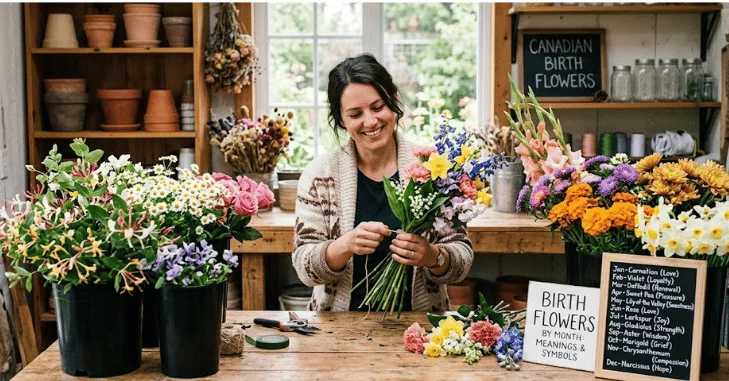
Birth flowers are traditional blooms linked to each month of the year, much like birthstones. They can add personal meaning to birthday bouquets, cards, jewellery, tattoos, and keepsakes. For Canadians, the tradition works best as a flexible guide rather than a strict rule.
Quick answer: Your birth month is traditionally linked with one or two flowers, each carrying symbolic meanings drawn from floral customs. January is associated with carnation and snowdrop, June with rose and honeysuckle, and December with paperwhite narcissus and holly. Secondary choices can vary between countries and sources. For the full picture, read Birth Month Flowers.
| Month | Common primary flower | Common alternate | Traditional themes |
| January | Carnation | Snowdrop | Love, loyalty, hope, renewal |
| February | Violet | Primrose | Faithfulness, modesty, young love |
| March | Daffodil | Jonquil | New beginnings, optimism, affection |
| April | Daisy | Sweet pea | Innocence, gratitude, farewell |
| May | Lily of the valley | Hawthorn | Sweetness, hope, protection |
| June | Rose | Honeysuckle | Love, affection, joy, lasting bonds |
| July | Larkspur | Water lily | Positivity, devotion, peace, rebirth |
| August | Gladiolus | Poppy | Courage, honour, remembrance, rest |
| September | Aster | Morning glory | Faith, passion, hope, appreciation |
| October | Marigold | Cosmos | Friendship, protection, harmony |
| November | Chrysanthemum | Varies by list | Happiness, good luck, affection |
| December | Paperwhite narcissus | Holly | Unconditional love, protection, goodwill |
These pairings reflect commonly published modern lists, including Canadian references. No single organization officially standardizes every monthly pairing, so alternate blooms and their interpretations can differ.
Key Takeaways
- Most months are associated with a primary bloom and at least one alternative.
- Floral meanings are symbolic traditions, not rules about someone’s personality.
- Different sources may list different secondary choices.
- Seasonal availability matters when buying fresh flowers in Canada.
- A favourite colour or meaningful variety can matter more than following the list exactly.
- The same monthly symbol can inspire bouquets, cards, art, jewellery, tattoos, or home accents.
Birth Flowers by Month: Why the Tradition Has More Than One List
Monthly flower associations are often discussed alongside the Victorian “language of flowers,” when flowers and arrangements were used to communicate feelings and ideas. The exact history of today’s month-by-month system is less certain, and modern sources don’t all use an identical list.
That explains why you might see two flowers assigned to one month or find a different secondary option on another website. Climate, regional traditions, gardening history, and later publishing choices all helped create variations.
For a birthday gift, that flexibility is useful. You don’t need to reject a beautiful bouquet because a particular secondary flower appears on one list instead of another. Choose an established monthly symbol that also suits the recipient.
January: Carnation and Snowdrop
Carnations are commonly connected with love, loyalty, and admiration. Their wide colour range also makes them easy to personalize. Pink can feel warm and affectionate, while red creates a stronger romantic impression.
Snowdrops add a quieter theme of hope, innocence, and renewal. That symbolism fits January well because the flower is closely associated with the return of growth after winter.
For a Canadian winter birthday, carnations are often the more practical fresh-flower choice. Snowdrop imagery can work beautifully on a card, print, or small keepsake.
February: Violet and Primrose
Violets traditionally suggest faithfulness, modesty, and lasting affection. Their purple colour can make them a good choice when you want something softer than the red roses often associated with February.
Primroses are linked with young love and the approach of spring. If fresh primroses aren’t suitable for a bouquet, a small potted plant can make the symbolism last longer.
March: Daffodil and Jonquil
The bright daffodil is strongly associated with new beginnings, optimism, and happiness. It suits the first signs of spring and works well for birthdays that mark a fresh chapter.
Jonquil is part of the narcissus family and carries related themes of affection and enthusiasm. Yellow varieties bring an especially cheerful look to a birthday arrangement.
April: Daisy and Sweet Pea
Daisies are linked with innocence, simplicity, and maternal affection. Their unfussy appearance makes them suitable for cheerful arrangements rather than highly formal bouquets.
Sweet peas traditionally convey gratitude and fond farewells. They can be a thoughtful choice for someone celebrating a birthday alongside another milestone, such as graduation, travel, or a move.
May: Lily of the Valley and Hawthorn
Lily of the valley is known for small white bell-shaped flowers and traditional meanings of sweetness, purity, and a return to happiness.
Hawthorn adds themes of hope, strength, and protection. Its flowering branches make it more useful as a symbolic reference than a standard florist bouquet in many situations.
If floral names interest you as much as the flowers themselves, LifeVoria also explores the name Liliana and its lily meaning.
June: Rose and Honeysuckle
Few floral symbols are as familiar as the rose. Its meaning changes with colour, but love and affection remain the central themes.
Red roses commonly communicate romance. Pink can suggest appreciation, while yellow feels brighter and more focused on friendship.
Honeysuckle represents joy and strong emotional bonds. Its climbing habit has also helped give it an association with attachment and connection.
For a June birthday, choose the colour based on your relationship with the recipient rather than assuming every rose needs to be romantic.
July: Larkspur and Water Lily
Larkspur brings themes of positivity, dignity, and devotion. Its tall flower spikes can add height and movement to a summer arrangement.
Water lilies are associated with peace, wisdom, and renewal. Their floating form also makes them a strong choice for artwork, jewellery, and tattoo designs.
LifeVoria already has a deeper guide to July’s larkspur and water lily meanings, including symbolism, colours, and gift ideas.
August: Gladiolus and Poppy
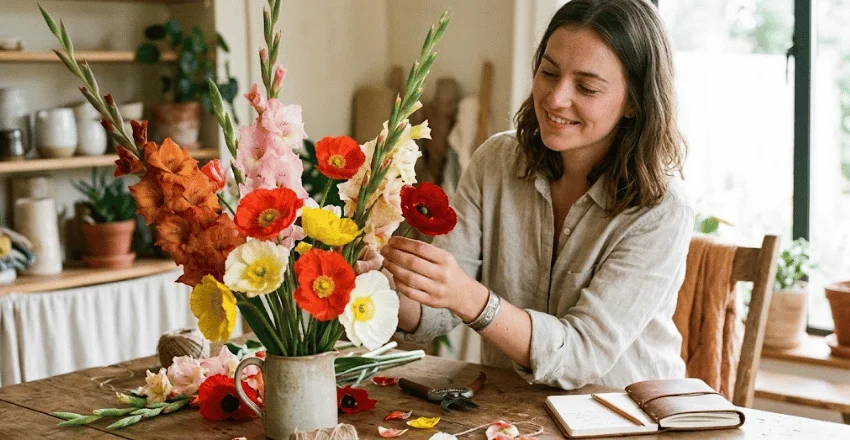
Gladiolus traditionally represents strength, courage, honour, and integrity. Its tall stems create a bold arrangement without needing a large number of flowers.
Poppies carry several meanings, including rest, dreams, remembrance, and consolation. Canadian context matters here. The red poppy is one of Canada’s best-known symbols of remembrance and was adopted by the Great War Veterans’ Association as the Flower of Remembrance in 1921.
That doesn’t make a poppy-themed birthday gift inappropriate. It means colour and presentation deserve thought. A recipient may connect a red poppy more strongly with remembrance than with a birthday tradition.
September: Aster and Morning Glory
Asters are traditionally associated with faith, love, and patience. Their star-like form and purple, pink, white, or blue tones work well in late-summer and early-autumn arrangements.
Morning glory carries themes of hope, affection, and appreciating the present moment. Since individual flowers open for a limited time, the symbolism can feel especially fitting for celebrating a particular day.
October: Marigold and Cosmos
Marigolds bring bold autumn colour and have traditional links with friendship, warmth, protection, and prosperity.
Cosmos offer a softer contrast. Their name is associated with order, and the flower is commonly linked with harmony, peace, balance, and love.
An October arrangement can pair warm orange marigolds with softer cosmos shades for a seasonal look that still feels birthday-focused.
November: Chrysanthemum
Chrysanthemum is the most consistent choice in November across common lists. Traditional meanings include happiness, friendship, good luck, and longevity.
Secondary November choices are less consistent. Some modern lists add peony, while Canadian references may list chrysanthemum alone. That variation is a good example of why these traditions shouldn’t be treated as an official botanical calendar.
Chrysanthemums also come in many colours and forms, giving you plenty of room to personalize a November bouquet.
December: Paperwhite Narcissus and Holly
Paperwhite narcissus is linked with affection and unconditional love. Its clusters of white flowers also suit the clean look of winter celebrations.
Holly carries traditional themes of protection and goodwill. Its green leaves and red berries naturally connect with the December holiday season.
For a birthday close to Christmas, use the recipient’s tastes to keep the gift from feeling like seasonal décor unless they enjoy that style.
How to Choose a Monthly Flower Gift in Canada
A symbolic flower is only useful if the finished gift suits the recipient. Start with the month’s traditional choices, then consider season, colour, availability, and personal preference.
Check what is available locally
A flower associated with a month isn’t guaranteed to be naturally in season across Canada during that month. Imported flowers, greenhouse production, regional climates, and florist inventory affect what you can buy.
Ask a local florist about availability before designing the entire gift around a single variety. If the primary bloom is difficult to source, the alternate is a reasonable choice.
Use colour to make the meaning more personal
Colour often changes how a flower feels. A red rose can read as romantic, while a yellow rose may suit a friend. White flowers can feel calm and understated, while orange and pink produce a livelier birthday arrangement.
The recipient’s favourite colour is usually more useful than choosing a shade solely because of a traditional definition.
Think beyond a fresh bouquet
The monthly motif can appear in many gifts:
- pressed or dried flower art
- botanical prints and cards
- engraved jewellery
- embroidered accessories
- candles or decorative objects with floral designs
- tattoo inspiration
- potted plants when the species is suitable
- framed illustrations for a bedroom or living space
For styling ideas, see LifeVoria’s Canadian home décor guide.
Keep the recipient and household in mind
Strong scents aren’t welcome in every home, and certain plants can be harmful if eaten by pets or children. Check the exact species before giving a potted plant or leaving cut stems within reach.
Traditional symbolism should never take precedence over the recipient’s allergies, pets, preferences, or living situation.
Make the Meaning Personal
A monthly flower gives you a useful starting point, but the most memorable birthday gift connects the tradition to the person. Pick the month’s bloom, choose a colour they enjoy, and decide whether fresh flowers or a lasting floral keepsake fits them better.
If the first choice isn’t available in your part of Canada, use the alternate without worrying about breaking a rule. The meaning comes from the thought behind the choice. For more seasonal, home, name, and everyday inspiration, browse LifeVoria’s lifestyle articles and guides.
Frequently Asked Questions
They are flowers traditionally associated with each month of the year. Each bloom is also given symbolic meanings such as love, hope, friendship, courage, or renewal. Lists can include a primary and alternate choice, and secondary pairings sometimes vary between sources.
There is no single official authority that created and standardized one global list. Different traditions and publications have preserved distinct alternatives, so two accepted choices have been common for many months. The second option is also useful when the first flower is unavailable or doesn’t suit the recipient.
The main pairings overlap heavily with lists used in the United States and United Kingdom, but alternate choices can differ. Canadian readers may also attach distinct cultural meaning to certain flowers, with the red poppy being the clearest example. Using a Canadian reference alongside local florist availability is a practical approach.
Use the alternate bloom, choose a similar seasonal flower in the same colour, or feature the traditional flower as an illustration rather than a fresh stem. The symbolism can also appear on a card, necklace, print, candle, or other keepsake.
No. The meanings are cultural and symbolic associations, not a personality test. A person’s character isn’t determined by the flower connected with their birth month. Use the symbolism as a thoughtful starting point rather than a rule.
Yes. Flowers can make meaningful tattoo motifs because you can combine the bloom with dates, initials, family symbols, or another meaningful plant. Research the shape and botanical details before settling on the final artwork so the chosen species remains recognizable.