


If you’ve seen the word donair on a Canadian pizza-shop menu, you may wonder why the wrap looks familiar but tastes unlike shawarma or a Greek gyro. Halifax’s version combines seasoned beef, soft pita, tomato, onion, and a sweet garlic sauce that gives the meal its unmistakable character.
Quick answer: This Halifax specialty is a warm pita filled with thin slices of heavily seasoned ground beef, chopped tomato and onion, then covered with a sweet, garlicky white sauce. The modern Canadian version took shape around Halifax in the early 1970s and became the city’s official food in 2015.
| Key fact | Classic Halifax-style version |
| Canadian origin | Halifax area, Nova Scotia |
| Era | Early 1970s |
| Main protein | Seasoned ground beef |
| Bread | Soft Lebanese-style pita |
| Classic toppings | Tomato and raw onion |
| Signature sauce | Sweet, tangy white garlic sauce |
| Official recognition | Halifax’s official food since 2015 |
| Flavour | Savoury, garlicky, sweet and slightly tangy |
Key Takeaways
- The Halifax version grew from a Greek-inspired gyro adapted for local Canadian tastes.
- Its defining feature is the contrast between spicy beef and sweet white garlic sauce.
- Tomato and onion are the classic toppings, though regional Canadian versions vary.
- Gyro, shawarma and Turkish döner share related cooking traditions, but they aren’t the same dish.
- Home cooks should bring ground beef to 71°C (160°F) before serving.
How Halifax Created a Canadian Street-Food Favourite
The story begins with Greek immigrant Peter Gamoulakos, who is widely credited with developing the Halifax version in the early 1970s. Accounts from Canadian food sources describe an early attempt to sell Greek-style gyro to local customers. The original combination didn’t catch on as expected.
Gamoulakos changed the formula. Seasoned ground beef replaced the more traditional gyro preparation, while a sweeter white sauce took the place of tzatziki. Tomato and raw onion completed the wrap.
That adaptation became closely associated with Halifax and eventually spread across Nova Scotia and other parts of Canada. Halifax Regional Council officially recognized the dish as the city’s official food in December 2015. We cover this in more depth in Lebanese Food.
The name itself is related to the Turkish word döner, referring to meat that turns while cooking. Canadian English developed its own spelling and meaning, particularly around the Halifax specialty.
What Goes Into the Classic Halifax-Style Build?
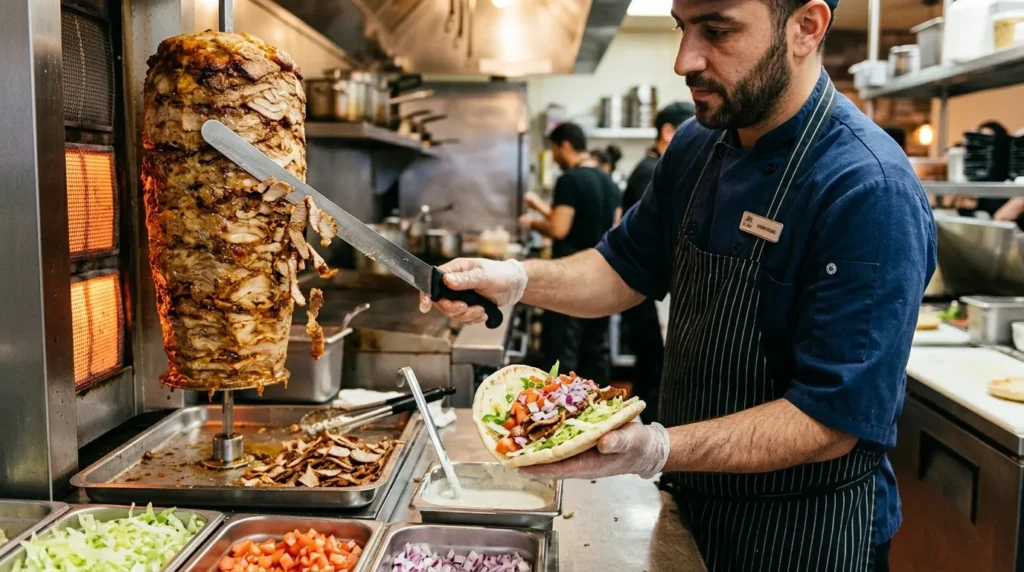
A traditional serving is simple. That simplicity makes each component matter. The meat usually starts with ground beef seasoned with oregano, garlic or garlic powder, onion powder, pepper, salt, and cayenne. Recipes vary, but the mixture is commonly worked until it becomes dense and cohesive. That texture helps it cook into a firm loaf or cone that can be sliced thinly.
The pita should be warm and flexible rather than dry. Steaming or gently warming it helps the bread fold around the filling without tearing.
Fresh chopped tomato and thinly sliced raw onion are the classic toppings. Some restaurants outside Atlantic Canada add lettuce, cheese, or other sauces, but those extras aren’t central to the familiar Halifax build. Then comes the ingredient that changes everything: sweet white garlic sauce.
What Makes a Donair Different From Shawarma, Gyro and Döner?
All four foods feature seasoned meat and are associated with Eastern Mediterranean or Middle Eastern cooking. Their meats, seasonings, sauces, and serving traditions differ.
| Food | Typical meat style | Common sauce | Typical accompaniments | Strong association |
| Halifax specialty | Seasoned ground beef formed densely and sliced | Sweet milk-based garlic sauce | Tomato, raw onion, pita | Nova Scotia, Canada |
| Greek gyro | Pork, chicken, lamb or beef depending on region | Tzatziki | Tomato, onion, pita | Greece |
| Shawarma | Marinated stacked slices of chicken, beef, or lamb | Garlic sauce or tahini-based sauces | Pickles, vegetables, flatbread | Middle East |
| Turkish döner | Seasoned meat cooked on a rotating vertical spit | Varies by preparation | Bread, vegetables or plated sides | Türkiye |
Shawarma typically consists of marinated layers or slices of meat stacked on a vertical spit. The Halifax version is better known for its seasoned ground-beef mixture and sweet sauce. Canadian food-safety guidance has also distinguished ground-meat cone products from shawarma made with stacked whole-muscle cuts.
A Greek gyro is the closer historical relative. Yet tzatziki gives gyro a cool, savoury flavour, while the Halifax sauce is noticeably sweeter.
Turkish döner is the broader ancestor behind the rotating-meat tradition and the name. The Canadian adaptation has developed enough distinct ingredients and cultural history to stand on its own.
Why the Sweet White Sauce Matters
The sauce balances salty, seasoned beef with sweetness, acidity, and garlic. Without it, the wrap tastes much closer to other seasoned-meat pitas. There are two common approaches in Canadian home recipes. One combines evaporated milk with sugar, garlic powder, and white vinegar. Canadian Living uses that style in its East Coast recipe.
Another shortcut starts with sweetened condensed milk. Dairy Farmers of Canada, for example, combines condensed milk with white vinegar and garlic powder for a simple sweet-and-tangy sauce. Both methods rely on the same basic contrast: creamy sweetness, sharp vinegar, and garlic. The exact thickness and sweetness can change from one restaurant or household recipe to another.
How to Make the Halifax-Style Wrap at Home
You don’t need a restaurant rotisserie to create a close home version. The key is developing a dense meat texture, cooking it safely, slicing it thinly, and briefly crisping the slices before assembly.
| Stage | What to do |
| Season | Combine ground beef with oregano, garlic, onion powder, pepper, salt and a little cayenne. |
| Work the meat | Mix thoroughly until the beef becomes smooth, sticky, and tightly bound. |
| Shape and cook | Form a compact loaf and bake until the centre reaches at least 71°C (160°F). |
| Rest and slice | Let the cooked meat rest, then cut it into thin slices. |
| Crisp | Brown the slices briefly in a hot skillet for better edges and texture. |
| Assemble | Warm the pita and add beef, tomato, onion and plenty of sweet garlic sauce. |
Home recipes from East Coast cooks often use this loaf-and-slice approach because it reproduces the dense texture without commercial equipment.
For an easy sauce starting point, Dairy Farmers of Canada uses 300 mL of sweetened condensed milk, 80 mL of white vinegar, and one teaspoon of garlic powder. You can adjust the acidity or garlic after mixing.
If you like practical food ideas you can adapt at home, LifeVoria’s protein shake guide for Canadians covers another easy-to-customize staple.
Cook Ground Beef Safely
Ground meat needs more careful temperature control than an intact steak because grinding can move bacteria throughout the meat.
Health Canada recommends cooking ground beef to an internal temperature of 71°C (160°F). Check the centre with a digital food thermometer rather than judging by colour alone.
Refrigerate cooked leftovers within two hours. Health Canada advises using refrigerated leftovers within four days or freezing them for longer storage. Reheated leftovers should reach 74°C (165°F).
These steps are especially useful when you cook a large meatloaf and plan to slice portions for several meals.
Why the Halifax Specialty Spread Across Canada
Its identity remains strongest in Nova Scotia, but the food has travelled far beyond Halifax. Prepared meat products and restaurant versions are now sold across Canada. Canadian menus may also interpret the wrap differently. Western versions, for instance, can include toppings or sauces that wouldn’t be considered part of the classic Halifax combination.
That regional variation explains why two Canadian restaurants can serve noticeably different versions under the same familiar name. For travellers who want to taste the Nova Scotia version closer to its roots, Halifax remains the obvious destination. You can pair your food planning with LifeVoria’s Canadian travel guides when building a future trip.
What to Expect When Ordering One for the First Time
Expect a messy meal. The pita is soft, the beef is juicy, and the sweet sauce can run quickly once the wrap is folded. If you want the closest experience to the Halifax standard, start with beef, tomato, and onion, topped with the signature white sauce. Try adding cheese, lettuce or other sauces later if the restaurant offers them.
The flavour may surprise anyone expecting shawarma. The sauce brings a pronounced sweetness that works against the peppery, garlicky meat. That sweet-savoury combination is the point, not an accidental variation. Eating it over a plate is a sensible decision.
A Halifax Original Worth Trying
This Nova Scotia favourite makes sense once you stop expecting it to taste like shawarma or gyro. The seasoned beef matters, but the sweet garlic sauce is what gives the wrap its Canadian identity.
Start with the classic beef, tomato, onion and sauce combination. Make it at home or seek out an East Coast-style shop, then decide whether regional extras improve it for you.
For more food, travel and everyday Canadian lifestyle coverage, explore LifeVoria’s latest guides.
Frequently Asked Questions
Traditional Canadian-style recipes usually combine a milk component with sugar or sweetened condensed milk, white vinegar, and garlic. Some recipes use evaporated milk plus sugar, while others use condensed milk for sweetness and body. The result should be creamy, garlicky, sweet, and lightly tangy.
No. It was influenced by Greek gyro, but the Canadian version developed a different meat preparation and sauce. Gyro commonly comes with tzatziki, while the Halifax specialty is known for seasoned ground beef and sweet white garlic sauce.
The modern Halifax version is considered a Canadian creation with roots in Greek and eastern Mediterranean cooking traditions. It emerged in Nova Scotia during the early 1970s and became closely tied to Halifax food culture.
Seasoned ground beef is the standard meat in the classic Halifax preparation. It is mixed until dense, cooked as a compact loaf or cone, then sliced thinly before serving.
Yes. A home oven works well. Shape the seasoned beef into a compact loaf, cook it to 71°C, let it rest, slice it thinly, and briefly brown the slices in a skillet. That method gives home cooks a practical alternative to restaurant rotisserie equipment.

