

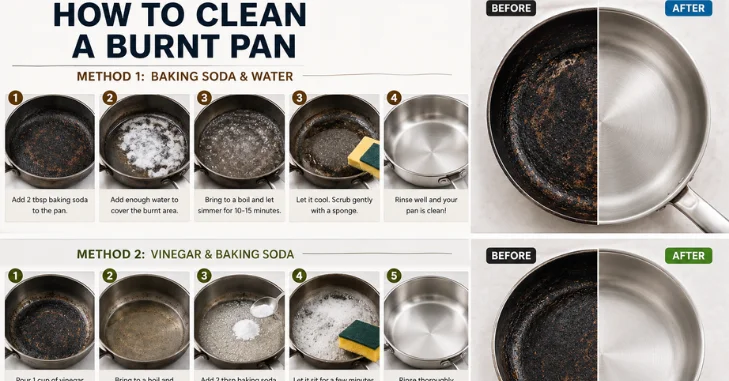
A scorched dinner doesn’t always mean your cookware is ruined. The safest cleanup method depends on what the pan is made of and how badly the food has burned onto it. There is more on this in Canadian Candy.
Short answer: If you need to know how to clean a burnt pan, let the cookware cool, remove any loose food, and start with warm, soapy water. For stubborn residue, simmer water with baking soda when the material allows it. Loosen the softened food with a wooden, silicone, nylon, or other non-abrasive tool, then wash and dry the pan.
| Pan type | How to Clean a Burnt Pan: Safest first approach | What to avoid |
| Stainless steel | Warm water, dish soap, then baking soda and water | Harsh metal scrubbers and bleach |
| Non-stick | Warm, soapy water and a soft sponge | Steel wool, scouring powder, and sharp tools |
| Seasoned cast iron | Scraper, short water simmer, thorough drying | Long soaking and dishwasher cleaning |
| Enamelled cast iron | Warm soak, baking soda, and a soft nylon tool | Thermal shock and metal scouring pads |
| Unknown or specialty cookware | Manufacturer’s care instructions | Strong acids or abrasives until compatibility is confirmed |
Key takeaways
- Start with the gentlest method and increase the cleaning strength only when needed.
- Let hot cookware cool before adding water.
- Match the cleaner and scrubber to the pan material.
- Replace damaged non-stick cookware rather than trying to scour the coating back into shape.
- Never mix household bleach with vinegar or other cleaning products.
Why the Pan Material Changes the Cleaning Method
Burnt food may look similar across different types of cookware, but the surface beneath it can respond differently to cleaning. Stainless steel can tolerate more aggressive cleaning than a coated frying pan. Non-stick coatings require soft tools. Seasoned cast iron needs prompt drying and oiling.
Enamel can chip or suffer thermal shock if handled too aggressively. That’s why many current cookware-care guides advise users to check the manufacturer’s instructions first. KitchenAid Canada also recommends choosing a cleaning method based on the cookware material.
If you aren’t sure what type of cookware you own, begin with warm water, dish soap, and a soft sponge. This approach carries far less risk than starting with a harsh cleanser.
What You’ll Need
Most scorched cookware can be cleaned with basic kitchen supplies:
- Dish soap
- Baking soda
- Warm water
- A wooden or silicone spatula
- A nylon brush or non-abrasive sponge
- Clean towels
- White vinegar, only when the cookware manufacturer allows it
- A cookware-specific cleaner for residue that survives gentler methods
You usually won’t need every item. Start with water and soap, then move to baking soda if the residue remains.
How to Clean a Burnt Pan Stains in 8 Safe Steps
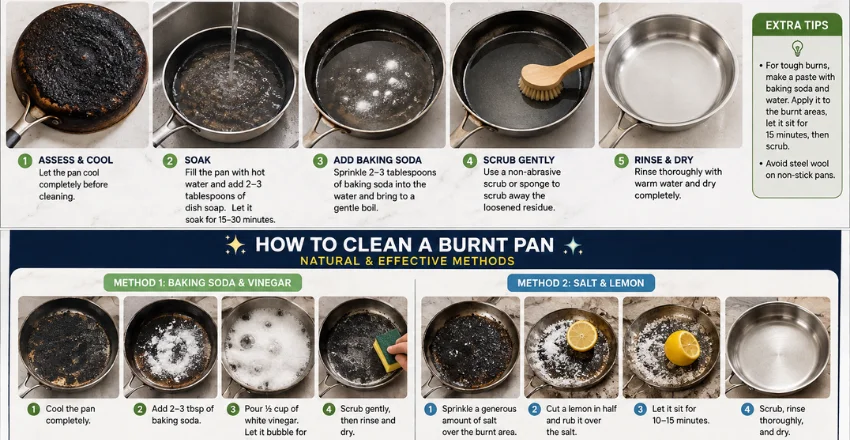
1. Cool the cookware completely
Take the pan off the heat and leave it until it is safe to handle. Avoid putting cold water into a pan that is still extremely hot. Le Creuset Canada warns that sudden temperature changes can cause thermal shock in some cookware.
2. Remove loose, burnt food
Use a wooden or silicone utensil to lift anything that comes away without force. Don’t attack the surface with a knife, fork, or sharp metal edge. A few minutes of soaking or simmering can make the next step much easier.
3. Soak water-safe cookware
Add warm water and a small amount of dish soap. Leave stainless steel, enamel, or suitably coated cookware to soak until the residue begins to soften. Avoid long soaking sessions with seasoned cast iron. Lodge advises against soaking cast iron because prolonged contact with water can encourage rust.
4. Simmer a baking soda solution
For compatible stainless steel or enameled cookware, cover the burned area with water and add baking soda. Bring the water to a gentle simmer. Le Creuset Canada recommends this method for stubborn residue on stainless steel and enameled cast iron.
5. Loosen the softened residue
Turn off the heat and let the cookware cool until it is safe to handle. Use a wooden spatula, nylon brush, pan scraper, or suitable non-abrasive sponge. Work slowly rather than apply more pressure when a mark resists.
6. Repeat the gentle treatment
A badly scorched layer may need a second soak or simmer. Repeating a mild process is often safer than moving straight to steel wool or an aggressive chemical cleaner.
7. Wash with dish soap
Once the blackened food is gone, wash the entire cooking surface with warm, soapy water. This removes grease, loosened residue, and traces of the cleaning mixture.
8. Dry the cookware completely
Dry the pan with a clean towel before storing it. Seasoned cast iron needs extra attention. Lodge recommends drying it promptly and applying a thin film of cooking oil after cleaning.
Choose the Right Method for Your Pan
Stainless steel
For stainless steel, begin with dish soap and warm water. If food remains stuck, try the baking soda simmer method. Le Creuset Canada recommends covering stubborn residue with water and baking soda, bringing the mixture to a boil, and then gently cleaning the softened surface.
T-fal Canada also advises boiling water in stainless steel cookware to loosen burned food. It recommends avoiding steel wool and scratchy cleaners on polished surfaces. Be cautious with vinegar. Some stainless steel cookware manufacturers include it in their care instructions, while others advise more restraint with acidic cleaners.
Check the instructions for your specific pan before using it.
Non-stick cookware
A non-stick frying pan requires the gentlest treatment. Use warm, soapy water and a nylon or soft sponge. T-fal Canada specifically advises against using scouring powders and scouring pads on non-stick cookware. If the residue won’t release, soak the surface in warm, soapy water before gently rubbing it.
Don’t use a metal spatula, steel wool, or abrasive powder to speed up the process. Cleaning also has limits. T-fal recommends replacing non-stick cookware when its coating becomes chipped, peeled, badly burned, scratched, or no longer performs as intended.
Seasoned cast iron
Cast iron requires a different routine because you want to remove the mess without leaving the pan damp. Lodge recommends using a pan scraper first. For stubborn food, simmer a small amount of water for three to five minutes. Use the scraper after the cookware has cooled.
Then wash the pan, dry it thoroughly, and apply a thin layer of cooking oil. According to Lodge, modern dish soap can be used on cast iron. The bigger problems are prolonged soaking, poor drying, and dishwasher cleaning.
Enamelled cast iron
Allow enameled cookware to cool before washing it. Then use warm, soapy water and a soft sponge or nylon tool. For stubborn, baked-on food, Le Creuset Canada recommends using water and baking soda, followed by gentle cleaning. Its care guidance also warns against metallic pads and harsh abrasives.
Avoid placing a hot enameled pan directly under cold water. The sudden temperature change can damage the finish.
How to Clean Burn Marks on the Outside of a Pan
The underside of a pan can collect polymerized oil, spilled sauces, and dark heat marks even when the cooking surface stays clean. For an uncoated stainless steel exterior, begin with warm, soapy water. A baking soda paste and non-abrasive sponge may help with stubborn marks if the manufacturer permits it.
Coated or colored exteriors require more caution. Don’t assume that a cleaner that is safe inside the pan is also safe for the exterior finish. Test any unfamiliar product on a small area first. Stop if the finish becomes dull, scratched, or discolored.
Cleaning Mistakes That Can Damage Cookware
A stubborn scorch can tempt you to use the strongest product in the cupboard. That can turn a cleaning problem into permanent surface damage.
Avoid these common mistakes:
- Don’t plunge very hot cookware into cold water.
- Don’t use steel wool on non-stick surfaces.
- Don’t use sharp metal utensils to chip away burnt food.
- Don’t leave seasoned cast iron soaking for hours.
- Don’t use a harsh cleaner without checking the cookware instructions.
- Don’t keep scrubbing a damaged non-stick coating.
There is also an important household chemical safety rule: never mix bleach with vinegar or other cleaning products. Health Canada warns that mixing bleach with acids such as vinegar can create toxic gases. It advises Canadians to follow product labels and never combine bleach with other household cleaners.
When Should You Replace the Pan Instead?
A scorch mark alone doesn’t always mean the cookware is finished. Stainless steel and cast iron can often recover from severe-looking residue. A damaged coating is different.
Consider the manufacturer’s replacement or warranty guidance if you notice:
- Peeling or flaking non-stick coating
- Deep scratches through a coated cooking surface
- Chipped interior enamel
- A badly warped base
- A handle that cannot be secured safely
- Damage that exposes the material beneath a cooking surface coating
T-fal Canada recommends replacing non-stick cookware with chipped, peeled, burned, or scratched coatings. Le Creuset advises having chips in interior enamel evaluated through its warranty process.
How to Prevent Another Scorched Pan
Use moderate heat unless a recipe calls for something different. Several cookware manufacturers note that excessive heat can cause sticking, burning, or surface damage. Keep enough liquid, fat, or sauce in the cookware during prolonged cooking. Stir foods that settle easily, such as oatmeal, rice, milk-based sauces, and sugary mixtures.
Clean grease films after cooking, rather than allowing them to bake onto the surface the next time you use the pan. A practical kitchen is easier to maintain when storage areas and everyday surfaces are easy to reach. LifeVoria’s home decor guide for Canadian homes offers more ideas for keeping living spaces functional without adding unnecessary clutter.
Keep the Pan, Not the Burn
Most scorched cookware deserves one careful cleaning attempt before you replace it. Start gently, match the method to the material, and let soaking or controlled heat do more of the work. For more practical home ideas, browse LifeVoria’s everyday lifestyle guides or check the latest LifeVoria articles.
Frequently Asked Questions
Let the cookware cool, remove any loose food, and start with hot, soapy water. For compatible stainless steel or enameled pans, simmering water with baking soda can loosen stubborn residue before gentle scrubbing.
Yes. Baking soda is useful on several cookware materials when the manufacturer permits it. Canadian cookware guidance from Le Creuset recommends using baking soda and water to remove stubborn residue from stainless steel and enameled cast iron.
It depends on the cookware. Some manufacturers recommend vinegar for certain surfaces, while others warn against acidic cleaners on specific materials.
Avoid treating vinegar as a universal solution. Check the care guide for your pan before use, especially for seasoned cast iron or specialty finishes.
Use warm, soapy water with a soft or nylon sponge. Avoid scouring powders, steel wool, and sharp utensils. If the coating is chipped, peeling, scratched, or badly damaged by overheating, check the manufacturer’s replacement guidance.
Yes. Heat can soften stuck-on food, making it easier to release with a suitable scraper or sponge. T-fal recommends boiling water to loosen burned food on stainless steel cookware. Lodge recommends a short three- to five-minute simmer for stubborn residue on cast iron.
Start with warm, soapy water. On an uncoated stainless steel exterior, use a compatible mild cleaner or baking soda paste with a non-abrasive sponge. For painted, enameled, or coated exteriors, follow the manufacturer’s care instructions first. Exterior finishes can react differently from the cooking surface.