


The May birth flower tradition gives people born this month two blooms to call their own: lily of the valley and hawthorn. Both flower in spring, yet they carry different meanings. Lily of the valley represents sweetness and returning happiness, while hawthorn is closely tied to hope and protection.
Short answer: May has two traditional flowers: lily of the valley and hawthorn. Lily of the valley is commonly regarded as the primary choice, representing sweetness, purity, humility, and a return to happiness. Hawthorn is the companion bloom, linked with hope, protection, and the grounded strength of late spring.
| Flower | Botanical name | Traditional meanings | What Canadians should know |
|---|---|---|---|
| Lily of the valley | Convallaria majalis | Sweetness, purity, humility, return to happiness | Beautiful but poisonous and considered invasive in parts of Canada |
| Hawthorn | Crataegus species | Hope, protection, strength | Several species grow in Canada; locally suitable species are better garden choices |
Lily of the valley is a member of the asparagus family rather than the true lily family. Hawthorns belong to the rose family and can grow as shrubs or small trees.
Key Takeaways
- May is traditionally represented by lily of the valley and hawthorn.
- Lily of the valley carries softer meanings such as sweetness, purity, and renewed happiness.
- Hawthorn represents hope, protection, and resilience.
- Canadian gardeners should be cautious with lily of the valley because it can spread aggressively.
- Canada mayflower offers a native alternative for gardeners who like a similar woodland look.
- Both flowers can inspire birthday gifts without needing to be planted in a garden.
What Is the May Birth Flower?
There isn’t one universal organization that controls flower assignments for every month. Modern flower calendars commonly connect May with lily of the valley and hawthorn. The Old Farmer’s Almanac also lists both blooms for May.
Many guides lead with lily of the valley and give hawthorn as the second choice. That doesn’t make hawthorn less meaningful. The pairing reflects how floral traditions developed across different places and periods.
Both plants also fit May visually. Lily of the valley produces small white bells close to the ground. Hawthorn produces clusters of spring blossoms on a woody shrub or tree. Together, they capture two sides of the season: delicate new growth and established strength.
Lily of the Valley Meaning: Sweetness, Humility, and Happiness
Lily of the valley is easy to recognize. Its white, bell-shaped flowers hang from slender stems above broad green leaves. Despite its common name, Convallaria majalis isn’t a true lily. It belongs to the Asparagaceae family.
Traditional flower symbolism connects it with sweetness, purity, humility, motherhood, and the return of happiness. Those meanings suit birthdays that mark a fresh beginning or a positive new chapter.
The flower also has a strong connection with spring gifting. Its small scale gives it a quieter look than roses or peonies. That makes the symbolism feel personal rather than formal.
If you enjoy the connection between flowers, names, and personal meaning, you may also like LifeVoria’s guide to the floral name Liliana.
A Canadian garden warning
The pretty appearance hides two practical concerns. Canada’s Invasive Species Centre identifies lily of the valley as an invasive plant that can spread through underground rhizomes and form dense patches. It advises gardeners against planting or transplanting it.
The plant is also poisonous. Ontario Poison Centre includes lily-of-the-valley among poisonous plants, while the Invasive Species Centre notes that all parts contain toxic compounds. That means it shouldn’t be treated as an edible flower or used as a cake garnish. Keep fresh plants and cut stems away from children and pets that may chew them.
Canadian gardeners have another option. Canada mayflower (Maianthemum canadense) is a native woodland plant sometimes called Canadian lily of the valley. The Invasive Species Centre recommends it as an alternative to the introduced plant. The two species aren’t the same plant, so the substitution works best for garden character rather than traditional symbolism.
Hawthorn Meaning: Hope, Protection, and Spring Strength
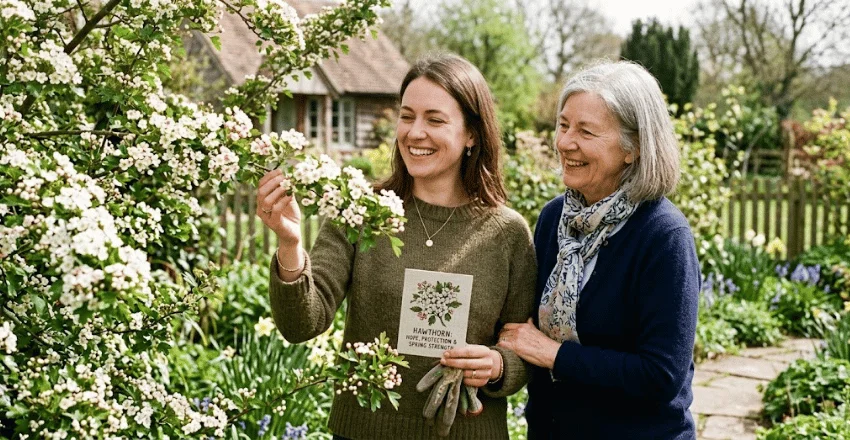
Hawthorn offers a different mood. Plants in the Crataegus genus are members of the rose family. They typically produce clusters of small flowers, followed later by fruits commonly called haws. Hope is one of hawthorn’s strongest traditional meanings. Protection and strength are also commonly associated with it. Hallmark Canada’s flower guide uses strength, protection, and hope to describe the bloom.
That symbolism works well for someone entering a new stage of life. A hawthorn-inspired card or print can acknowledge both optimism and perseverance without becoming overly sentimental. Hawthorn also has a stronger connection to Canadian gardens. Ontario’s tree and shrub resources list several Crataegus species in the province. Their ranges vary, so gardeners should choose a species suited to their region and available growing space.
A locally appropriate hawthorn can provide spring flowers and a natural woody form. Before planting, check provincial guidance or ask a reputable native-plant nursery which species is best suited to your area.
Why Does May Have Two Traditional Flowers?
Flower-of-the-month lists developed through cultural traditions rather than one official international system. As a result, several months are associated with multiple blooms. Current reference lists continue to pair May with lily of the valley and hawthorn.
The two choices also give people different symbolic directions.
- Choose lily of the valley imagery for tenderness, happiness, purity, or a gentle spring theme.
- Choose hawthorn imagery for hope, protection, endurance, or a more natural woodland feel.
- Choose a native Canadian plant if the gift is meant for a garden and ecological suitability matters.
You don’t need to decide which flower is the only “correct” one. Both belong to the modern May tradition.
Choosing a May Birthday Gift in Canada
A May birth flower gift doesn’t need to be a fresh bouquet. In Canada, availability varies by province, season, and florist. Garden suitability also matters if you’re giving a living plant.
A few practical ideas work in almost any part of the country:
- Choose a florist-designed spring arrangement. Ask for white bell-shaped flowers, hawthorn-inspired blossoms, or a similar seasonal palette when the traditional blooms aren’t available.
- Give botanical art. A print showing both flowers preserves the symbolism without introducing an unsuitable garden plant.
- Choose personalized jewellery. A small bell-shaped flower, hawthorn branch, or engraved May motif makes the idea wearable year-round.
- Give a garden plant thoughtfully. Look for a locally suitable native species rather than automatically buying lily of the valley.
- Build a flower-themed gift box. Add a birthday card, candle, stationery, or decorative print in white, green, and soft pink tones.
The gift can also shape the room once the birthday is over. LifeVoria’s Canadian home decor ideas show how to work botanical colours and natural details into a space. If fresh lily of the valley is part of a bouquet, tell the recipient that it isn’t edible. Extra care makes sense in homes with small children or curious pets.
May Flower Tattoo and Keepsake Ideas
You can use either bloom as a personal symbol without growing the plant itself. Simple designs also work well for those who prefer a subtle reference to their birth month. A fine-line lily of the valley stem can represent renewal or happiness. A hawthorn branch can suggest hope and protection. Combining both creates a fuller May motif.
Other ideas include an engraved pendant, pressed-flower-style artwork, a botanical initial, or a small illustration paired with the recipient’s birth date. An emerald-green accent can add another May reference without overpowering the flowers.
A Meaningful May Choice for Canadians
May’s two traditional blooms offer more than a pretty birthday theme. One represents sweetness and renewed happiness. The other adds hope and protection. For a Canadian gift, you can use those meanings in flowers, art, jewellery, cards, or home decor. For a garden, take the extra step of choosing plants that suit your province and local ecosystem.
That approach keeps the symbolism personal without creating an avoidable safety or invasive-plant problem.
For more seasonal ideas, meaningful celebrations, and everyday inspiration, explore LifeVoria’s lifestyle guides.
Frequently Asked Questions
Lily of the valley is associated with sweetness, purity, humility, and a return to happiness. Hawthorn is commonly linked with hope, protection, and strength. Together, the two flowers create a theme of gentle renewal supported by resilience.
Lily of the valley is commonly presented first in modern monthly flower guides, with hawthorn as the companion flower. Both are widely recognized as traditional flowers for people born in May.
Birth-month flower lists aren’t governed by one official worldwide authority. Traditions have changed across regions and time periods, so several months now have two commonly recognized flowers.
Yes. Lily of the valley contains toxic compounds, and Canadian poison and invasive-species resources warn against ingestion. It shouldn’t be used as an edible garnish or placed where children or pets may eat it.
If you suspect someone has eaten part of the plant, contact your local poison centre or appropriate medical service for advice.
Canadian invasive-species guidance advises against planting or transplanting it because it can spread aggressively. Gardeners can consider Canada mayflower, a native woodland alternative, where local conditions are suitable.
The genus includes numerous species, and several hawthorns occur in Canada. Ontario, for example, documents multiple Crataegus species across the province. Check the species rather than assuming every hawthorn sold is native to your area.