

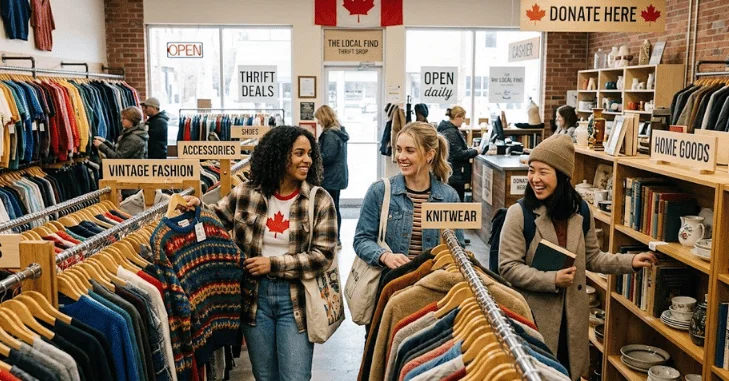
If you searched for “thrift stores near me” in Canada, the fastest way is to start with your postal code rather than a generic national list. Map results show what is nearby, while official store locators help confirm the address and store type. Before you drive, check current hours and call if you need a specific item or donation service. There is more on this in Nail Salons Near Me in Canada.
Short answer: Use your city or postal code in a map app, then cross-check the closest results with official store locators. Confirm today’s hours, item categories, and donation rules before leaving. For clothing, start with Value Village, Salvation Army, or Goodwill. For furniture and renovation materials, add Habitat ReStore.
| What you need | Good place to start | Check before leaving |
|---|---|---|
| Everyday clothing and shoes | Value Village, Salvation Army, Goodwill, independent resale shops | Hours, sizes, return policy |
| Furniture and appliances | Habitat ReStore, larger second-hand shops | Measurements, delivery options, item condition |
| Vintage clothing | Independent vintage and consignment stores | Price range, sizes, whether stock is curated |
| Books and media | Goodwill bookstores, charity shops, independent used-book sellers | Category selection and opening hours |
| A place to donate | Charity shops or participating donation centres | Accepted items and drop-off times |
Key takeaways: Start with proximity, then narrow your choices by what you want to buy. A nearby general resale shop may suit a clothing hunt, while a ReStore makes more sense for a desk or renovation supplies. Store hours, donation rules, and stock can change, so confirm the details that matter before making the trip.
How to Find Thrift Stores Near Me in Canada Fast
A good local search should take a few minutes. You do not need to open dozens of directories or compare every shop in your city.
- Search your postal code or neighbourhood. Use a map app or a Canada-focused second-hand directory to see nearby locations and driving distances.
- Open the official locator for promising chains. Check Value Village, Salvation Army, Goodwill, or Habitat ReStore if one appears nearby.
- Compare the store type with your shopping goal. Clothing, furniture, vintage pieces, books, and building materials are not equally common everywhere.
- Confirm the trip. Check the current opening hours, directions, contact information, and any specific services you need.
Canada-wide directories can help uncover independent shops that major chain locators miss. One Canadian directory, for example, lets shoppers browse by location and category while warning that store information can change. It recommends contacting the shop before visiting.
That last check matters most for smaller shops. A map listing may be useful for discovery, but the store itself is the stronger source for holiday hours, temporary closures, donation limits, or a recent move.
Choose the Right Kind of Second-Hand Shop
The closest option is not always the right one. Start with the item you want, then decide which type of store it deserves.
Value Village
Value Village is a practical starting point for second-hand clothing, accessories, shoes, and household goods. Its parent company’s locator includes locations across several Canadian provinces and lets shoppers search by location.
Its business model is worth understanding. The company states that it is for-profit and that shopping in its stores does not directly support a nonprofit. It says donated reusable goods can support nonprofit partners because the company pays partners for those goods.
That makes Value Village different from a charity-run shop, even though both sell donated second-hand goods.
Salvation Army Thrift Store

The Salvation Army is a better fit if you want to combine second-hand shopping with support for a Canadian nonprofit. Its national thrift operation sells clothing and household goods and has locations across Canada.
The organization says purchases and donations help support community programs and services. Its site also has a location finder, which makes it more useful than relying on an old address from a blog or social post.
Goodwill
Goodwill can be useful for clothing, home goods, books, outlet-style shopping, and specialty locations. Availability varies by region.
Goodwill Industries Ontario Great Lakes, for example, offers a locator for Community Stores, bookstores, boutiques, and outlets. The organization also tells shoppers outside its service region to use the broader Goodwill network to find their local organization.
That regional structure is a reason to search by your actual city rather than assuming a single provincial locator covers the whole country.
Habitat ReStore
For furniture, appliances, décor, and building materials, Habitat ReStore deserves a separate search. Habitat for Humanity Canada says its ReStores give new and used home products a second life, with profits supporting Habitat organizations across Canada.
Its locator accepts a province, city, or postal code. Results can include the address, phone number, email, and website for each location. Habitat also recommends confirming details directly with the store.
Independent Vintage and Consignment Shops
Independent vintage stores usually offer a more edited selection than large donation-based shops. You may spend less time searching racks, but curated pieces can carry higher prices.
Consignment shops work differently again. They generally sell items on behalf of their owners and share the sale proceeds. This can make them useful for higher-quality fashion, accessories, or designer pieces.
If you enjoy discovering useful local businesses and everyday experiences, Lifevoria’s practical lifestyle guides can help you keep exploring beyond a single shopping trip.
Check Hours, Stock, and Donation Rules Before You Go
Opening hours are one of the weakest points in any static “nearby” article. A store can change its schedule long after a directory page was published. Use the official store page when possible. Then compare it with the current map listing. If the two disagree, call the location before driving across town.
This matters even more around statutory holidays. Provincial and local schedules can affect opening times, and independent operators may set their own hours. Stock is even less predictable. Second-hand retail depends on what arrives, what passes inspection, and what other shoppers buy. A location with a strong furniture section one week may have little of interest the next.
If you need something specific, a quick phone call can save a wasted journey. Ask a narrow question such as whether the location normally carries used appliances, children’s clothing, books, or building materials. Donation rules also vary. A shop that accepts clothing may decline large furniture, damaged goods, mattresses, electronics, or renovation materials. Check the location’s current policy before loading the car.
What to Look For Once You Arrive
A low price is useful only when the item still has enough life left to justify buying it. For clothing, check seams, zippers, cuffs, underarms, stains, and fabric wear. Hold lighter garments up to good lighting so small holes are easier to see.
For shoes, examine the sole and heel before focusing on the brand. Uneven wear can make an otherwise attractive pair uncomfortable. Furniture deserves a slower inspection. Check joints, drawers, odours, water marks, missing hardware, and dimensions. Measure the space at home before shopping, and keep the measurements on your phone.
Small appliances need extra care. Ask whether the store tests electrical items and what its return policy covers. Never assume a second-hand appliance can be returned because policies differ between retailers. For vintage pieces, buy because you like the item and its condition. A familiar label or an old-looking tag does not automatically make something rare or valuable.
Find Better Deals Without Chasing Restock Myths
There is no reliable nationwide “best restock day” for second-hand shopping in Canada. Stores receive, process, and release inventory under different schedules. A better strategy is to learn the habits of the locations you visit. Ask staff whether new goods reach the floor throughout the day or in larger batches. That answer is more useful than a social media rule from another city.
Also compare the second-hand price with the item’s current replacement cost. Common basics, inexpensive housewares, and heavily worn fast-fashion pieces are not automatically bargains because they sit on a resale shelf. Condition matters more than the discount percentage. A $12 item that lasts for years is a stronger purchase than a $6 item you replace next month.
For a larger city, widen your search radius slightly. The shop ten minutes farther away may have a different donation base, a different mix of goods, or a category that better matches your needs.
Your Next Step
Start with one search, not a full afternoon of browsing online. Enter your postal code, choose three nearby options, and match each one to what you want to buy.
Check their hours and directions before leaving. If you need furniture, appliances, a donation drop-off, or another specific service, confirm that detail by phone.
Then visit the most promising location first. If its selection is weak that day, move to the second shop on your shortlist rather than driving around without a plan.
For more ideas on practical local discoveries and everyday living, keep exploring Lifevoria’s lifestyle coverage. If a local listing changes or you know about a useful shop readers should be aware of, contact the Lifevoria team to share the update with the editorial staff.
Frequently Asked Questions
Enter your city, neighbourhood, or postal code into a map app, then check the closest promising results against official store locators. Confirm current hours before leaving. For independent shops, use a local directory as a discovery tool and verify important details directly.
It depends on what you need. Value Village, Salvation Army, and Goodwill are logical starting points for clothing and household goods. Habitat ReStore is more targeted toward furniture, appliances, décor, and building materials. For vintage fashion, an independent vintage or consignment shop may save you more browsing time.
Use the “open now” filter in your preferred map service, but treat it as a first check. Open the retailer’s official location page next. If the trip is long or the hours conflict, phone the store.
No. Business models differ. The Salvation Army describes its thrift operation as part of a Canadian charitable organization. Value Village states that it is a for-profit company. It also explains that donations can generate payments to nonprofit partners.
Habitat ReStore is a useful first search because home goods are central to its model. Its Canadian locator covers furniture, appliances, décor, and building materials and allows location-based searching. Large general resale stores and local furniture consignment shops are also worth checking.
Often, but not always. Donation services, accepted categories, and drop-off arrangements vary by organization and location. Check the specific store page before bringing large items. This is especially important for furniture, appliances, building materials, and anything that may require extra handling.