


A golden pastry crust and warmly spiced meat filling make this Tourtiere Recipe a comforting choice for a Canadian holiday table. This recipe uses pork, beef, potato, onion, and familiar French-Canadian seasonings. You can prepare the filling ahead, assemble the pie later, and serve it with a sharp or tangy condiment. There is more on this in Cinnamon Bun Recipe.
| Recipe detail | Information |
| Style | French-Canadian savoury meat pie |
| Yield | 1 nine-inch pie, about 8 servings |
| Prep time | About 35 minutes |
| Cooling time | About 45 minutes |
| Baking time | 45 to 55 minutes |
| Oven temperature | 375°F (190°C) |
| Main filling | Ground pork, beef, potato, onion |
| Best for | Holiday dinners, winter meals, make-ahead cooking |
Short answer: Cook a savoury pork-and-beef filling with onion, potato, broth, and warm spices. Cool it completely, spoon it into a double pie crust, seal and vent the top, then bake until deep golden. Rest the pie before slicing so the filling sets and the crust stays crisp.
What Makes Tourtiere Recipe a Canadian Classic?
The savoury pie is closely tied to French-Canadian cooking, especially in Quebec. It is commonly associated with Christmas and Réveillon, although families across Canada prepare different versions throughout the colder months. Canadian sources also make one point clear: there is no single recipe that every region considers definitive.
In Montreal and many other parts of Quebec, the familiar version often uses ground meat inside a standard double crust. In Saguenay–Lac-Saint-Jean, the regional version can be much deeper. It typically contains cubed meat and potatoes and is cooked for several hours.
That regional difference matters. A home cook looking for the familiar ground-meat holiday pie needs a different method from someone preparing the long-baked Lac-Saint-Jean dish.
The name also has an interesting history. Quebec’s Commission de toponymie notes that tourtière was used in France for a vessel or mould for cooking pies before the term became associated with the dish itself.
What You’ll Need
For the filling
- 1 tbsp neutral cooking oil
- 450 g (1 lb) ground pork
- 450 g (1 lb) lean ground beef
- 1 medium yellow onion, finely chopped
- 2 garlic cloves, minced
- 1 medium potato, peeled and finely diced
- 125 mL (1/2 cup) beef or chicken broth
- 1 tsp dried summer savoury
- 1/2 tsp dried thyme
- 1/4 tsp ground cinnamon
- 1/4 tsp ground cloves
- 3/4 tsp salt, plus more to taste
- 1/2 tsp black pepper
- 60 mL (1/4 cup) fresh breadcrumbs
For the crust
- Pastry for one 9-inch double-crust pie
- 1 egg
- 1 tbsp water
Both homemade pastry and a good refrigerated pie dough work. Cold pastry is easier to handle and tends to keep its shape better while baking.
How to Make the Meat Pie Step by Step
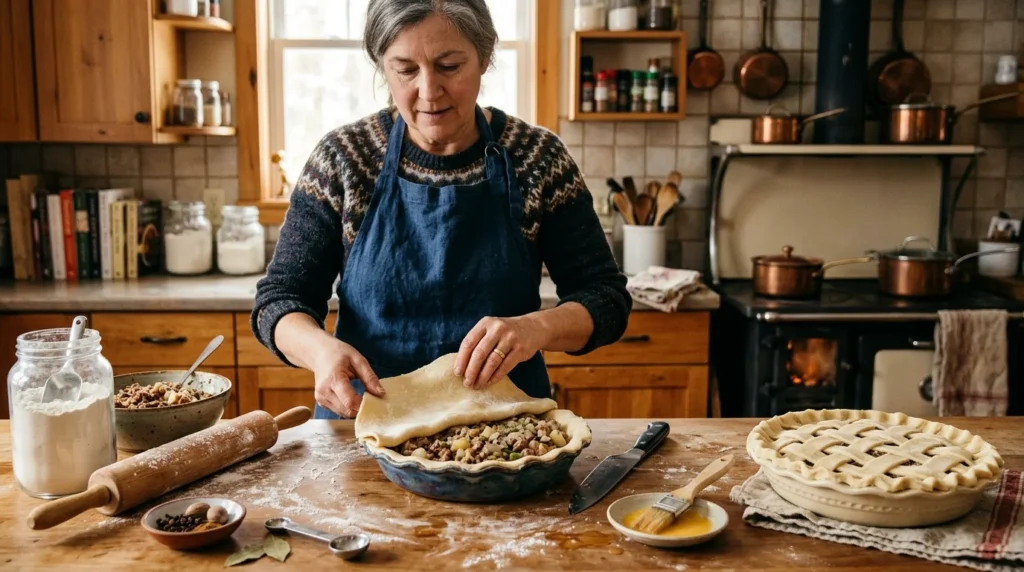
- Brown the meat. Heat the oil in a large skillet over medium heat. Add the pork and beef. Cook for 7 to 9 minutes, breaking the meat into small pieces.
- Add the aromatics. Stir in the onion and garlic. Cook for about 4 minutes, until the onion begins to soften.
- Cook the filling. Add the potato, broth, savoury, thyme, cinnamon, cloves, salt, and pepper. Reduce the heat and simmer for 15 to 20 minutes.
- Thicken and cool. Cook until the potato is tender and little free liquid remains. Stir in the breadcrumbs. Transfer the mixture to a bowl and cool completely.
- Assemble the pie. Heat the oven to 375°F (190°C). Fit one pastry round into a 9-inch pie plate. Spoon the cooled filling into the cups without packing it too firmly.
- Add the top crust. Cover with the second pastry round. Trim and crimp the edges. Cut several small vents in the centre. Beat the egg with water and brush a thin layer over the pastry.
- Bake and rest. Place the pie on a baking sheet. Bake for 45 to 55 minutes, until the crust is deeply golden. Rest for at least 15 minutes before cutting.
Canadian Living and the Governor General of Canada both use the same basic principle in their published versions: cook the filling first, cool it, then bake it inside a double crust. Meat combinations, spices, and binders vary by recipe.
The Two Details That Prevent a Soggy Pie
The filling should be moist but not wet before it reaches the pastry. If broth pools at the bottom of the skillet, keep simmering. Breadcrumbs can absorb the small amount that remains.
Cooling is equally important. Hot filling releases steam against uncooked pastry. That can soften the bottom crust before the oven has time to set it.
If you’re cooking for guests, make the filling a day earlier and refrigerate it. Assembly then takes only a few minutes.
Which Meat and Spices Work Best?
Pork adds richness to the filling and is common in many Canadian versions. Beef adds a deeper savoury flavour. Veal can replace part of the beef if you prefer a milder mixture.
Published Canadian recipes show plenty of variation. Pork may appear alone or with beef and veal. Potatoes, breadcrumbs, mushrooms, or other ingredients may help bind the filling. Cinnamon, cloves, savoury, thyme, and nutmeg are among the seasonings used in different recipes.
For this version, the spice level stays restrained. You should taste the meat, onion, and pastry first. The cinnamon and cloves belong in the background.
What to Serve With a French-Canadian Meat Pie
Rich meat and buttery pastry benefit from something acidic or crisp on the side. Good choices include:
- cranberry relish;
- homemade ketchup or chili sauce;
- mustard pickles;
- a green salad with sharp vinaigrette;
- roasted root vegetables.
Canadian Living recommends tangy accompaniments such as chili sauce, while the Governor General’s recipe suggests homemade ketchup.
For another Canadian seasonal read, Lifevoria’s guide to the October long weekend and Thanksgiving in Canada covers the country’s autumn holiday calendar.
Make-Ahead and Freezing Tips
The filling is an easy make-ahead component. Cook it, cool it, cover it, and refrigerate it before assembling the pie. You can also freeze a prepared pie. Canadian Living publishes versions designed for freezing before baking, which makes the dish useful for holiday planning.
If you’re freezing your own version, wrap it well and label the date. Thaw it safely in the refrigerator before baking, unless your pastry recipe gives specific directions for baking frozen pastry. Leftover slices reheat well in the oven because dry heat helps the pastry regain some crispness.
Common Mistakes to Avoid
Leaving too much liquid in the filling: The meat mixture should hold together without broth running across the pan.
- Filling the crust while the meat is hot: Give the mixture time to cool before assembly.
- Using too much cinnamon or cloves: Both spices quickly become dominant. Start with small amounts.
- Skipping the steam vents: A few cuts in the top crust provide a route for steam to escape.
Cutting immediately after baking: A short rest helps each slice keep its shape.
These details matter more than adding extra ingredients. A well-seasoned filling and properly baked crust provide most of the character.
Bring a French-Canadian Favourite to Your Table
A good meat pie doesn’t need a complicated filling. Start with well-browned meat, softened onion, restrained spices, and enough potato or breadcrumbs to control the moisture.
Prepare the filling ahead if you’re cooking for a holiday gathering. Once it is cold, assembling the pie is straightforward, and most of the remaining work happens in the oven.
Lifevoria covers recipes, food guides, travel, and everyday Canadian lifestyle topics. You can read more about Lifevoria’s food and recipe coverage or browse the latest Lifevoria guides.
Frequently Asked Questions
Cool filling protects the uncooked pastry from excess heat and steam. It also makes the pie easier to fill, seal, and decorate without softening the dough.
No single formula applies everywhere. Potatoes appear in many forms and help give the filling body, but other recipes rely on breadcrumbs or other ingredients.
No. Pork is common, but recipes may combine it with beef, veal, chicken, or other meats. Regional and family traditions differ widely.
Yes. Make-ahead freezing is common in published Canadian recipes. For dependable results, cool the filling first, wrap the assembled pie securely, and follow suitable thawing and baking directions for your pastry.
The answer depends on which part of Quebec and which family is using the term. Statistics Canada notes that Quebec has no universal definition. In Saguenay–Lac-Saint-Jean, the name can refer to a deep pie with cubed meat and potatoes that cooks for hours.