
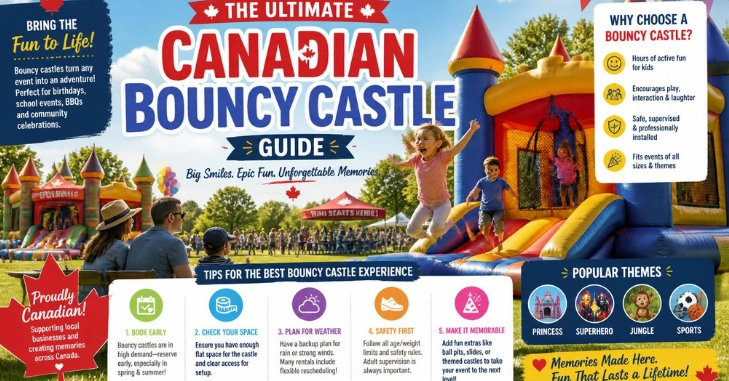
A bouncy castle can turn a backyard birthday, school celebration, or family gathering into an easy activity for energetic kids. The harder part is choosing a suitable inflatable and making sure your space, weather, setup, and supervision plan can support it. Canadian families also need to think about rental terms and local event requirements before party day.
| What to check | Practical starting point |
| Rent or buy | Rent for occasional events; consider buying for frequent home use |
| Space | Measure the usable area, not the full yard. |
| Surface | Level, clear ground is easier to set up safely. |
| Child group | Match the unit to the ages, sizes, and number of users. |
| Weather | Have a cancellation or backup plan for wind and rain. |
| Setup | Confirm anchoring, blower, power, delivery, and takedown. |
| Supervision | Keep an attentive adult responsible for the inflatable. |
Quick answer: For most Canadian families, renting makes more sense for a one-off birthday or community event, while buying is better suited to frequent backyard use. Choose by usable space, child size, weather plans, setup requirements, and supervision. A suitable option is one you can anchor correctly, monitor closely, and stop using when conditions become unsafe. For the full picture, read Cloud Couch.
Key Takeaways
- Renting removes most storage, cleaning, and setup concerns.
- Buying may make sense if your family will use the inflatable often.
- Measure your yard before comparing themes or special features.
- Capacity should follow the manufacturer or rental company’s limits.
- Wind and rain should be part of your party plan from the start.
- Active adult supervision matters throughout the entire play session.
Rent or Buy? Decide Based on How You Will Use It
Canadian search results show plenty of rental options, as well as residential models sold for home use. The right choice depends less on the design and more on how often you expect to use it.A snapshot of Canadian rental listings reviewed in August 2026 showed many standard-day rentals priced between C$150 and C$395. Delivery, taxes, specialty setups, and larger units may change the total.
| Factor | Renting | Buying |
| Upfront spending | Lower for a single event | Higher initial purchase |
| Setup | Often handled by the rental company | Usually your responsibility |
| Storage | None after pickup | Requires dry storage space |
| Cleaning | Usually handled by the provider | Owner handles cleaning |
| Choice each event | Easy to change size or theme | Limited to the model you own |
| Frequent use | Costs repeat each event | Can become more economical over time |
| Repairs | Usually provider’s responsibility | Owner handles damage and repairs |
Renting: Pros and cons
Pros
- You can choose a size for the specific event.
- Delivery and takedown may be included.
- You don’t need long-term storage.
- Commercial providers may offer larger designs and slide combinations.
Cons
- Popular dates may book early.
- Delivery or surface fees can raise the final price.
- Weather cancellation terms vary by company.
- You must work within the provider’s delivery area and schedule.
Buying: Pros and cons
Pros
- You can use the inflatable on more than one occasion.
- There is no need to reserve a date.
- Small residential designs can work for casual backyard play.
Cons
- You become responsible for setup and maintenance.
- The unit must be dried and stored correctly.
- Damage can create repair or replacement costs.
- Children may outgrow the size or capacity of a residential model.
The practical verdict
Rent for a birthday, wedding, school event, or occasional gathering. It reduces the amount of equipment you need to manage yourself.Buying can make sense for families with enough storage and regular opportunities to use it. Before purchasing, compare the expected number of uses with the full cost of ownership.
How to Choose a Bouncy Castle for a Canadian Event
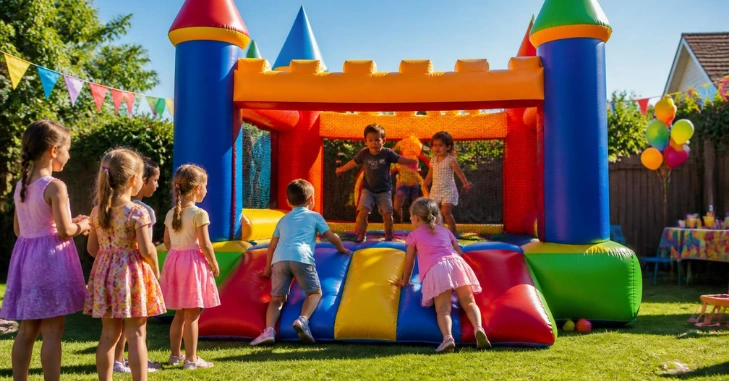
A bouncy castle fun theme can catch your attention, but it shouldn’t be the first filter. Work through these seven checks before you reserve a unit or place an order.
1. Measure the usable setup space
Measure the flat area where the inflatable will sit. Don’t count garden beds, slopes, sheds, trees, fences, pools, or other obstacles as usable space. Ask for the unit’s full inflated dimensions before booking. You also need clear room around the structure for safe entry, supervision, and equipment.
A narrow side yard may suit a compact bounce house. A large combo with a slide may require much more length than expected.
2. Match the unit to the children using it
Age labels alone don’t tell the full story. Height, weight, activity level, and the number of children also affect how suitable a unit will be. Follow the stated user and weight limits for the exact model. Don’t assume two inflatables of similar size have the same capacity.
Mixing much larger children with smaller ones can also create harder collisions. For a broad age range, scheduled turns by size can make play easier to manage.
3. Confirm the surface, anchoring, and power plan
The setup area should be level and free from rocks, sticks, sharp objects, and other hazards. Anchoring needs to follow the instructions for that specific inflatable.
If you’re renting, ask who installs and checks the anchors. Don’t assume setup is included just because delivery is. The blower also needs a suitable power source. Ask where power must be located and what electrical setup the provider requires before arrival.
4. Make weather part of the booking decision
Canadian outdoor parties can face changing conditions even during warmer months. Wind and rain deserve the same attention as the guest list. Health Canada advises against using an inflatable play structure in windy or rainy conditions. Its December 2025 safety guidance lists improper anchoring and bad weather among the causes of a structure tipping over or being lifted by the wind.
Ask the provider what conditions cause a cancellation, shutdown, or rescheduling. The answer should follow the equipment manufacturer’s operating requirements. Never treat a forecast as a guarantee that conditions will stay constant. If the weather changes during the event, stop play when the unit can no longer be used safely.
5. Check exactly what the rental price includes
A low advertised number doesn’t always equal the final amount. Before paying a deposit, ask for the complete total.
Check whether the quoted price includes:
- delivery;
- setup and takedown;
- taxes;
- the blower and anchoring equipment;
- extra charges for certain surfaces;
- travel outside the normal service area;
- cleaning;
- rescheduling or cancellation.
Getting those details in writing makes it easier to compare two providers fairly. For more practical family and lifestyle planning ideas, the Lifevoria home page features guides designed to help readers make informed choices without overcomplicating the process.
6. Decide who will supervise before guests arrive
An inflatable shouldn’t become a place where adults assume someone else is watching. Assign a responsible adult before play begins. That person should manage capacity, discourage rough play, and watch for changing conditions. They also need a clear way to empty the structure when necessary.
For larger gatherings, rotate supervisors instead of expecting one person to monitor the attraction for several hours.
7. If you buy, plan for cleaning and storage
Ownership continues after the children stop playing. The inflatable should be cleaned according to its instructions and dried fully before storage. A damp unit can develop unwanted odors or material problems. Storage also needs to protect the fabric, blower, stakes, and accessories from damage.
Before purchasing, check the packed dimensions and weight. Make sure moving the unit between storage and the yard is realistic for your household.
A Party-Day Safety Checklist
Good preparation makes supervision easier once guests arrive. Use a short pre-play check every time the inflatable is used.
- Inspect the play surface for damage or unusual deflation.
- Check that the unit remains firmly secured.
- Keep the entrance and exit clear.
- Follow the stated capacity and user limits.
- Remove shoes and objects that could damage the surface.
- Avoid pushing, flips, climbing on walls, and rough play.
- Keep food and drinks outside the play area.
- Supervise children actively instead of checking only occasionally.
- Stop use if rain, wind, equipment trouble, or another hazard develops.
- Empty the structure promptly if the blower or inflation becomes unreliable.
Manufacturer instructions should always take priority over general party advice.
Questions to Ask Before You Book a Rental
A short call or message can reveal more than a colourful product page. Ask these questions before paying a deposit:
- What are the inflated dimensions?
- What ages, weights, and user capacity does this model allow?
- What type of surface can you install it on?
- Who handles anchoring and the final setup check?
- Are delivery, setup, takedown, and taxes included?
- What happens if wind or rain affects the event?
- Is there a rescheduling or refund policy?
- Do public events require different paperwork or insurance?
- What power access must I provide?
- How early will the unit arrive before guests?
Rules for public, school, municipal, and commercial events can differ from private backyard use. Requirements may also vary by province and venue. If your event is outside a private home, ask the venue and rental provider about permits, insurance, and local requirements before confirming the reservation.
Final Verdict
For a one-day celebration, renting is the stronger default for most families. You can choose a unit that fits the current guest list without adding storage or long-term maintenance.
Buying a bouncy castle becomes more appealing when you expect repeated backyard use and have a suitable setup area. In either case, size, capacity, anchoring, weather, and supervision matter more than the theme printed on the walls.
Start by measuring your usable space and recording the ages of the attending children. Then compare options using the same seven checks in this guide. Readers who want a future guide on a particular family-event question can send the Lifevoria team a topic suggestion.
Frequently Asked Questions
Smaller children may need a separate play period from bigger, more active kids. Stop use when weather or equipment conditions become unsuitable.
There isn’t one age that applies to every model. Residential and commercial inflatables have their own age, size, and weight guidelines. Use the manufacturer’s label or the rental company’s rules for the exact unit. For toddlers, look for smaller equipment specifically designed for younger children.
Only if the specific equipment allows it; many residential units and children’s rentals have individual or total weight limits that make adult use unsuitable. Check the stated limits instead of judging the structure by its appearance.
Some commercial rental units are designed for suitable indoor venues, but ceiling height and safe anchoring still matter. Residential product instructions may differ. Confirm indoor use with the manufacturer or rental provider before setup. Never assume a gym, hall, or basement automatically has enough clearance.