

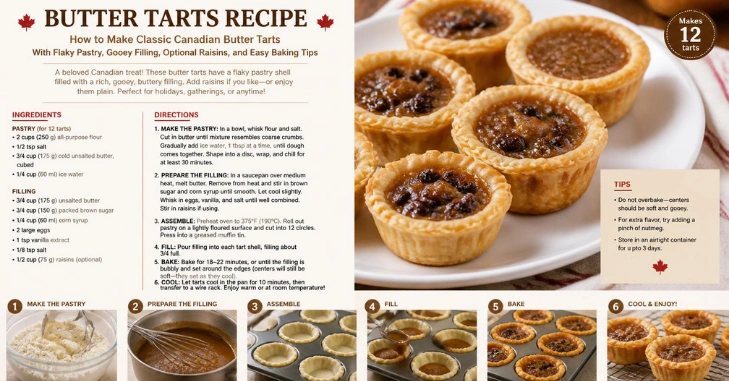
Few Canadian desserts inspire more opinions than a small tart with a sticky center. The pastry can be crisp or tender, while the filling can range from soft to set firmly. Raisins remain a matter of personal preference.
Butter tarts are small Canadian pastries with a flaky shell and sweet filling made from butter, brown sugar, egg, and syrup. For a gooey center, fill the shells about two-thirds full. Bake until the edges are set while the middle still has a slight wobble, then cool before removing them from the pan.
| Key detail | What to know |
| Yield | 12 tarts |
| Prep time | About 15 minutes with prepared shells |
| Bake time | About 20–25 minutes |
| Oven | 175°C (350°F) |
| Ideal filling | Set around the edges, soft in the center |
| Add-ins | Raisins, currants, walnuts, pecans, or none |
| Storage | Up to 2 days at room temperature in an airtight container |
| Freezing | Up to 3 months when well wrapped |
Key Takeaways
- Keep the tart shells chilled until you fill them.
- Mix the filling only until combined.
- Stop filling each shell at about two-thirds full.
- Watch the center rather than relying only on the timer.
- Raisins and nuts are optional, not requirements.
- Let the pastries cool before lifting them from the pan.
What Makes This Canadian Tart So Distinctive?
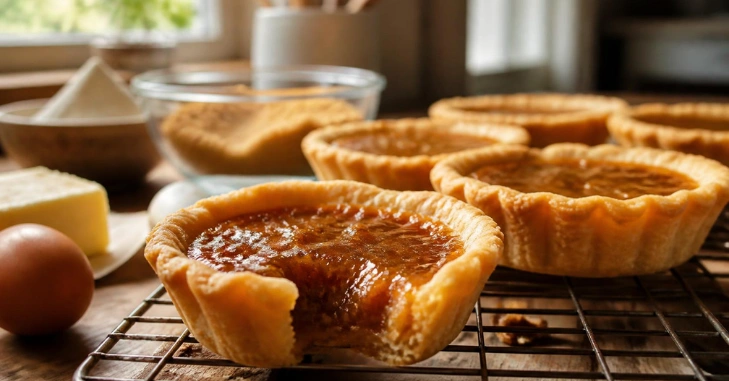
The dessert has become closely associated with Canadian baking, especially in Ontario. Its basic formula is simple: pastry surrounds a filling based on butter, sugar, syrup, and egg. The earliest known printed Canadian recipe has been traced to a 1900 cookbook produced by the Women’s Auxiliary of the Royal Victoria Hospital in Barrie, Ontario. Food historians still debate the pastry’s deeper ancestry and possible links with older British and French-Canadian sweets. There is more on this in Breakfast Burrito Recipe for Busy Canadian Mornings.
That long history also helps explain why there is no single accepted filling for butter tarts. Canadian bakers disagree about raisins, nuts, maple syrup, and the ideal level of gooiness. Canadian Living has even described the preferred middle ground as a soft filling that is neither liquid nor firmly set.
What You’ll Need
This version makes 12 pastries and uses prepared tart shells to keep the method practical for home bakers.
Filling ingredients
- 12 unbaked tart shells, kept chilled
- 250 mL (1 cup) packed brown sugar
- 125 mL (1/2 cup) light corn syrup
- 60 mL (1/4 cup) unsalted butter, melted and cooled slightly
- 2 large eggs
- 5 mL (1 teaspoon) vanilla extract
- 1 mL (1/4 teaspoon) salt
- 5 mL (1 teaspoon) white or apple cider vinegar
- Up to 125 mL (1/2 cup) raisins, currants, or chopped nuts, optional
Canadian recipes use both corn syrup and maple syrup. Dairy Farmers of Canada uses corn syrup in its basic version, while the Canada Agriculture and Food Museum publishes a maple-syrup filling. You can replace the corn syrup with pure maple syrup for more maple flavor. Expect the final texture to differ slightly, so judge doneness by the center rather than the clock.
How to Make Butter Tarts With a Gooey Center
- Heat the oven. Set your oven to 175°C (350°F). Place the chilled tart shells in a muffin pan or on a sturdy baking sheet.
- Combine the sugar and butter. Stir the brown sugar and melted butter together until the mixture looks evenly moistened.
- Add the eggs. Whisk them in gently, one at a time. Stop as soon as the filling becomes smooth.
- Finish the filling. Stir in the syrup, vanilla, salt, and vinegar. Avoid vigorous beating, as excess air can cause the filling to rise more aggressively.
- Add any extras. Divide raisins, currants, walnuts, or pecans among the shells. Leave them out if you prefer a plain center.
- Fill the shells. Spoon the mixture into each shell until each shell is about two-thirds full. Leaving space matters because the filling bubbles as it bakes.
- Bake until the edges set. Start checking around 20 minutes. The pastry should look golden, while the center should still move slightly when the pan is nudged.
- Cool before removing. Leave the pastries in the pan for about 10 to 15 minutes. Then loosen the edges gently and transfer them to a rack.
Use the Bake Time to Control the Filling
The ideal texture is personal. A shorter bake leaves more movement in the center, while extra oven time creates a firmer bite. Current Canadian recipes and baking guides reflect both preferences.
| If you want | Look for | What to do |
| Soft and gooey | Set edges with a noticeable center wobble. | Remove earlier in the baking window. |
| Soft but stable | Set edges with only slight movement. | Give the center a few extra minutes. |
| Firm and chewy | Little movement across the filling | Bake toward the longer end of the range. |
Remember that the center continues to settle as it cools. Cutting or biting into one straight from the oven can make a properly baked filling seem underdone.
Raisins, Nuts, or Plain Filling?
Raisins may be the most famous Canadian baking ingredient associated with this dessert. Some family recipes treat them as essential. Others leave the filling completely plain. There is historical precedent for dried fruit, yet modern recipes commonly present raisins as optional. Food Day Canada documents early versions that contain currants, while current recipes also use raisins, walnuts, pecans, or no additions at all.
If you’re serving several people, divide the batch before adding extras. Six plain and six with raisins can settle the debate without requiring two recipes.
Common Baking Mistakes to Avoid
- Overfilling the shells: The sugary mixture expands and bubbles in the oven. Extra space reduces sticky overflow.
- Beating the filling too much: Gentle mixing is enough. You don’t need to whip air into the eggs.
- Judging only by color: The pastry can look finished before the center reaches your preferred texture.
- Removing the pastries immediately: Warm filling is delicate and can pull away from the shell.
- Waiting too long after an overflow: Spilled sugar hardens as it cools. Loosen sticky edges while the pan is still slightly warm.
For a crisper shell, keep the pastry cold before baking. A preheated baking sheet beneath the pan can also give the bottom more direct heat.
Storing, Freezing, and Serving
Keep cooled pastries in an airtight container at room temperature for up to two days. For longer storage, refrigerate them for several days. Multiple baking sources also recommend freezing them for up to three months when tightly wrapped. Thaw frozen pieces before serving. A short warm-up in a moderate oven can help restore some crispness to the pastry.
These small desserts also fit naturally into Canadian autumn gatherings. If you’re planning a seasonal meal, LifeVoria’s Canadian Thanksgiving long-weekend guide provides useful holiday context. For a relaxed dessert table at home, pair baking with LifeVoria’s practical home decor ideas for Canadian homes. Simple plates, warm lighting, and a pot of coffee are enough.
Make a Batch Your Way
The appeal of this Canadian classic is that a single basic filling can accommodate several family preferences. Start with cold shells, leave room for bubbling, and use the center’s movement as your guide.
Bake half plain if you’re unsure about raisins. Try maple syrup in a later batch if you want a different flavor once you know the texture you prefer. Write down your exact baking time for your pan and oven. For more practical cooking and lifestyle ideas, explore LifeVoria’s recipe and food coverage.
Conclusion
Butter tarts remain one of Canada’s most recognizable and beloved desserts because they combine simple ingredients with a surprisingly personal baking experience. A flaky pastry shell, buttery brown-sugar filling, and soft center create the classic combination, while optional additions such as raisins, currants, walnuts, or pecans allow every baker to make the recipe their own.
The secret to successful butter tarts is less about complicated techniques and more about paying attention to a few important details. Keep the tart shells chilled, mix the filling gently, avoid overfilling, and watch the center carefully during baking.
Frequently Asked Questions
They don’t have to. Raisins appear in many Canadian family recipes, but plain versions are equally common. Currants, walnuts, and pecans are other familiar additions.
The mixture expands as it heats. Filling the shells above roughly two-thirds full leaves too little room for that movement. A baking sheet underneath can catch small spills.
Yes. Canadian recipes use both. Maple syrup adds a more pronounced maple flavor, while corn syrup produces a more neutral sweetness. Watch the center closely because substitutions can change the final set.
No. They share a sweet, egg-based filling and pastry crust, but the Canadian tart is smaller and does not require pecans. Its filling is also commonly served softer and gooier.