

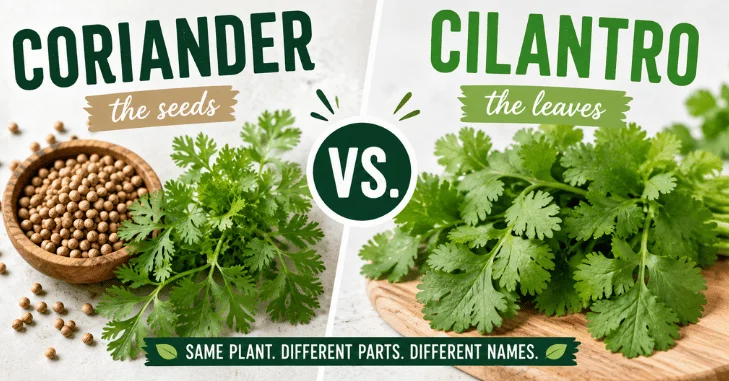
Search for “coriander vs cilantro” in Canada, and you’ll find two names that seem to describe different ingredients. The simple answer is that both come from Coriandrum sativum. In English Canadian cooking, cilantro usually means the fresh leaves and tender stems, while the seed spice is normally called coriander.
Quick answer: In English Canada, cilantro usually means the fresh green leaves and tender stems. Coriander usually means the dried seeds, sold whole or ground. Both come from the same plant. If an international recipe asks for “fresh coriander,” it usually wants the leafy herb Canadians commonly buy as cilantro.
| Coriander vs Cilantro | Fresh herb | Seed spice |
| Common Canadian name | Cilantro | Coriander or coriander seed |
| Plant part | Leaves and tender stems | Dried fruit commonly called seeds |
| Flavor | Fresh, citrusy, grassy | Warm, citrusy, mildly nutty |
| Typical form | Fresh bunches | Whole seeds or ground spice |
| Common use | Salsa, chutney, salads, garnishes | Curries, spice blends, pickling, roasted dishes |
| Direct substitute for the other? | No | No |
Key Takeaways
- Both ingredients come from the same botanical species, Coriandrum sativum.
- Canadian English usually calls the fresh herb cilantro and the dried seed spice coriander.
- British and many international recipes may call the fresh leaves “coriander” or “coriander leaves.”
- Fresh leaves and dried seeds taste different and aren’t direct substitutes.
- If a recipe is unclear, check whether it asks you to chop fresh leaves or measure a dried spice.
Coriander vs Cilantro in Canada: What the Names Usually Mean
English Canadian usage generally follows the wider North American naming pattern. Ontario’s agriculture ministry states that cilantro refers to the fresh herb, while the seed spice gets the other name. Saskatchewan’s agriculture guidance makes the same distinction.
The Government of Canada’s TERMIUM Plus terminology database is even more specific. It says the seed and ground form use one name, while “cilantro” indicates the fresh leaves. Canadian Living follows this convention in its recipes as well.
Canadian labels still aren’t completely uniform. Health Canada lists the leafy ingredient as “Coriander (cilantro), raw.” The Canadian Food Inspection Agency also uses the wording “fresh coriander, also known as cilantro.”
That variation explains why two Canadian stores, cookbooks, or databases may use different labels for the same bunch of green leaves.
French terminology adds another layer. Quebec’s language authority lists coriandre as the preferred French term for the plant. Its terminology notes also recognize that English “cilantro” is used more often for the leafy portion.
One Plant, Two Different Kitchen Ingredients
The leafy herb and the spice come from Coriandrum sativum, an annual plant in the same broad family as carrots, celery, dill, and parsley. Canadian agricultural sources identify both forms as products of that single species.
The difference appears as the plant develops. Home cooks harvest the green leaves and stems as a fresh herb. Later, the plant flowers and produces the small round fruits that cooks commonly call seeds. Those parts may share a botanical origin, but they don’t perform the same job in a recipe. We cover this in more depth in Tourtiere Recipe.
How the Flavor and Cooking Uses Differ
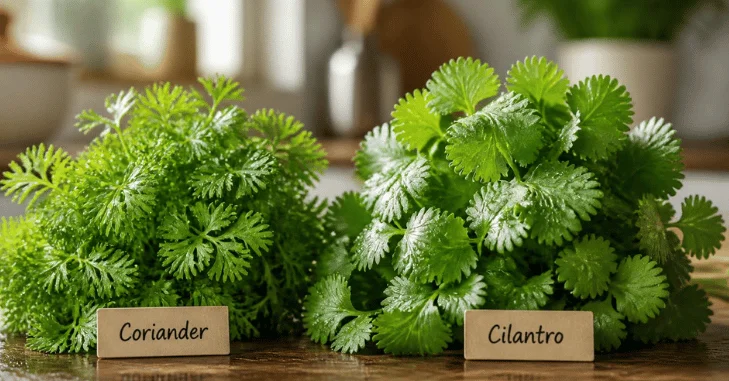
Fresh cilantro has a sharp, green aroma with citrus-like notes. It works well when a dish needs freshness rather than a deep spice flavor.
You’ll often see it used in:
- salsa and guacamole
- chutneys and fresh sauces
- tacos and rice dishes
- salads
- soups and noodle dishes
- Curry added shortly before serving.
The dried seed spice has a warmer aroma. Canadian Living describes the seeds as aromatic with a slight lemony character, while Saskatchewan notes their pleasant spicy aroma.
Whole or ground seeds suit dishes such as
- curries and spice mixtures
- dry rubs
- pickling brines
- soups and stews
- roasted vegetables
- certain baked or savory dishes
Fresh leaves can lose much of their distinctive aroma during prolonged cooking, so cooks often add them near the end. Seeds can handle heat well and are frequently toasted or cooked with other spices.
How to Decode Canadian and International Recipes
The easiest way to avoid buying the wrong ingredient is to check where the recipe was written and how the ingredient is used. For a Canadian or American recipe, “cilantro” almost always points to fresh leaves and stems. A reference to whole or ground coriander normally means the dried spice.
International recipes require a little more attention. In the UK and several other English-speaking regions, “coriander” can describe the fresh herb. The dried ingredient may be written as “coriander seeds.”
Use these clues when the wording is unclear:
- A handful, bunch, or chopped leaves usually means the fresh herb.
- A teaspoon or tablespoon of ground spice means the dried seed.
- Instructions to toast or crush the ingredient point to seeds.
- “Fresh coriander” or “coriander leaves” in a British-style recipe usually means cilantro.
This recipe-reading rule is more dependable than relying on the ingredient name alone.
Can You Substitute the Fresh Herb and Seed Spice?
Not directly. Their flavors and textures are too different. If a recipe needs fresh leaves, flat-leaf parsley can provide a similar fresh-herb role. A little lime or lemon can add brightness. Basil or mint can also work in certain dishes, though each changes the final flavor.
For the dried spice, substitutes such as cumin, caraway, or fennel may work depending on the recipe. They aren’t identical, so start cautiously and adjust to taste. Healthline also separates substitutes for the fresh leaves from substitutes for the seed spice. The key rule is simple: replace an herb with another suitable herb and a dried spice with another compatible spice. Don’t replace chopped fresh leaves with a spoonful of ground seed.
Why Does Cilantro Taste Like Soap to Some People?
If the fresh herb tastes soapy to you, genetics may play a role. A genome-wide association study involving more than 14,000 people found an association between soapy flavor perception and genetic variation near a group of olfactory-receptor genes. One candidate, OR6A2, responds to several aldehydes found in the herb’s aroma.
Genetics doesn’t explain every preference. The study found that common genetic variants accounted for only part of the difference between people. So a soap-like flavor is a genuine sensory perception for some diners, not proof that the herb is spoiled.
The Bottom Line for Canadian Cooks
You don’t need to treat the two names as competing plants. They describe parts of the same species, with regional language creating most of the confusion. In an English Canadian kitchen, remember one practical rule: fresh green bunch equals cilantro; dried whole or ground seeds equal the spice. For an international recipe, look at the ingredient form before heading to the grocery store.
For more practical reading, browse LifeVoria’s Food guides, visit the Protein Shake, or read the Ketchup Chips guides.
Frequently Asked Questions
They come from the same plant, but Canadian cooks normally use the names for different parts. For coriander vs. cilantro in Canada, think dried seed spice versus fresh leafy herb.
Usually, yes. If a British, Australian, or international recipe asks for fresh coriander or coriander leaves, a Canadian shopper should normally look for the fresh leafy bunch sold as cilantro.
No. The ground product comes from dried seeds. “Cilantro” refers to fresh leaves and tender stems in common Canadian English usage.
No direct one-for-one substitution works well. The seed is warm and aromatic, while the leaves are fresh and green. Choose a substitute from the same ingredient type instead.
Canadian terminology isn’t perfectly standardized across every context. Government sources may use paired labels such as “coriander (cilantro)” for the leafy herb, while common English Canadian cooking distinguishes leaves from seeds.
Check the recipe’s origin and instructions. If it asks for chopped leaves or a bunch, buy cilantro. If it calls for teaspoons, grinding, crushing, or toasting, buy the dried seed spice.