

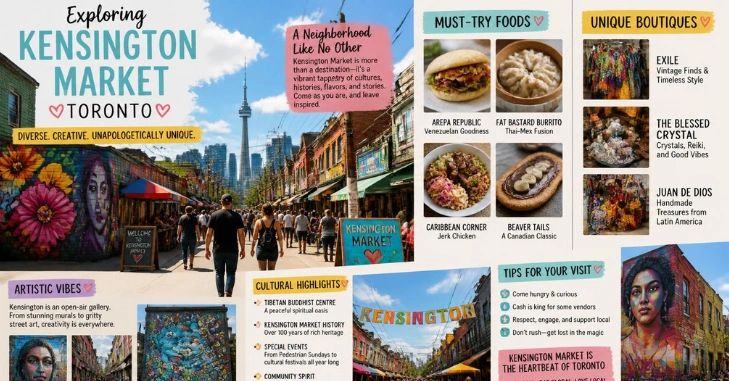
Kensington Market is a compact, walkable neighborhood west of downtown Toronto, known for international food, vintage shops, street art, and independent businesses. Most visitors can enjoy a relaxed visit in two to four hours. Go by TTC or on foot, arrive hungry, and check individual business hours before leaving.
| Quick detail | What to know |
| Location | Downtown Toronto, between College Street, Dundas Street West, Spadina Avenue, and Bathurst Street |
| Best for | Food, vintage shopping, murals, cafés, and independent stores |
| Time to allow | About 2–4 hours for a first visit |
| Admission | Free to explore; food and shopping cost extra. |
| Typical business hours | Each shop and restaurant sets its own hours. |
| Easy transit options | 510 Spadina plus nearby Dundas, College, and Bathurst streetcars |
| 2026 festival highlight | Pedestrian Sundays run on the last Sunday of each month from May through October. |
The neighborhood occupies a small part of downtown Toronto, but its streets hold an unusual mix of food, retail, history, and everyday city life. Its official boundaries run from College Street to Dundas Street West and from Spadina Avenue to Bathurst Street.
That compact size makes it easy to combine with Chinatown or another downtown stop. If you’re planning a broader trip, Lifevoria’s travel guides can help you build the rest of your itinerary around it.
Why This Toronto Neighborhood Is Worth Visiting
This district isn’t a purpose-built attraction. Residential streets, small storefronts, produce shops, restaurants, cafés, and older houses sit side by side. That mix is central to its character.
Its history is also nationally important. Parks Canada recognizes the entire 27-hectare neighborhood as a National Historic Site because successive immigrant communities shaped its markets, streets, and commercial life.
Eastern European Jewish residents played a major role in developing the open-air market culture during the early 20th century. Later, communities from Italy, Portugal, the Caribbean, Latin America, and Asia added new businesses, foods, and cultural influences, helping make Kensington Market Toronto the multicultural neighborhood it is today.
There is a fresh heritage development for 2026, too. Toronto’s Heritage Conservation District Plan for the area was approved by the Ontario Land Tribunal this year. The plan aims to conserve the neighborhood’s historic character while recognizing its changing cultural life.
What to Do in Kensington Market on Your First Visit
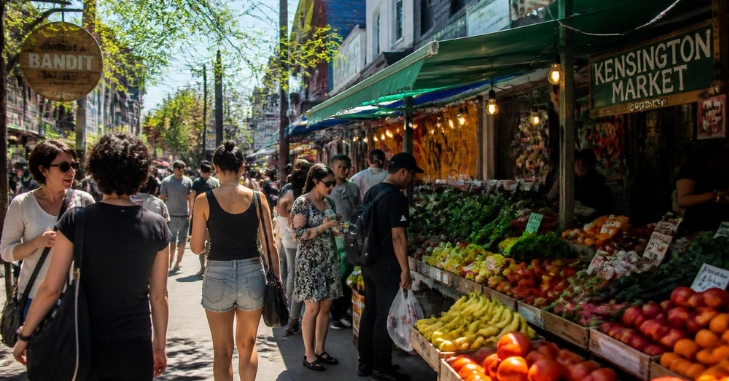
A good visit works better as a slow walk than a checklist. Give yourself time to turn down side streets, look through storefronts, and stop when something catches your attention.
Start with these five experiences:
- Try food from more than one kitchen. The area is known for international restaurants, bakeries, groceries, and casual food counters. Rather than planning one large meal, sampling two or three smaller items gives you more variety. Destination Ontario highlights the neighborhood as a culinary destination, featuring cafés, restaurants, vegetarian options, and global flavors.
- Browse vintage and independent shops. Clothing, second-hand finds, gifts, records, and locally made goods remain a major draw. Augusta and Kensington avenues are useful streets for browsing. Destination Toronto also identifies the area as one of the city’s established destinations for vintage shopping.
- Look for murals and street art. Painted walls and changing storefront art make walking part of the experience. If Toronto’s creative culture interests you, Lifevoria also features Toronto artist and inventor Craig Small.
- Spend time around Bellevue Square. The park offers a convenient break between food and shopping stops. It also puts you near several of the district’s main walking streets.
- Keep going into Chinatown. Spadina Avenue forms the eastern edge of the neighborhood, so Chinatown is an easy extension. This pairing works well when you have half a day rather than a couple of hours.
A simple first-visit walking route
For an uncomplicated route, enter from Spadina Avenue near College Street and walk west toward Augusta Avenue. Follow Augusta south, explore Baldwin Street, then loop through Kensington Avenue toward Dundas Street West.
This route doesn’t require a tour or reservation. It also keeps you close to food, shops, and public transit while leaving room for detours.
When Is the Best Time to Go?
Late morning through the afternoon is the most practical window for a first visit. There is no single opening time because the area is a neighborhood rather than one enclosed market. Destination Ontario notes that individual shops and restaurants maintain their own schedules.
A weekday gives you more room to browse. Weekends feel busier, especially during warm weather and special events. For a more festival-like experience, plan around Pedestrian Sundays. The published 2026 schedule runs on the last Sunday of selected months from May through October, generally from noon to 7 p.m. The remaining listed dates are August 30, September 27, and October 25.
These days bring car-free street sections, food, performances, and community activities. They can also mean larger crowds, so choose a normal weekday if shopping is your main priority.
How Long Should You Spend There?
Plan for two to four hours if this is your first time. Two hours can cover a walk, a snack, and a few shops. Three or four hours gives you enough time to eat, browse vintage stores, photograph murals, and sit down for coffee without rushing.
Older City of Toronto visitor material suggested that shoppers could easily spend four hours in the district. Current visitor guides commonly suggest about two to three hours. Your interest in food and second-hand shopping will make the biggest difference. If you pair the neighborhood with Chinatown, set aside about half a day.
Getting There by TTC, Walking, or Car
Public transit is usually the easiest choice. The 510 Spadina streetcar runs along the neighborhood’s eastern boundary, with stops at College Street, Nassau Street, and Dundas Street West. TTC confirms that the route operates along Spadina Avenue between Spadina Station and Union Station.
Nearby, 505 Dundas, 506 Carlton, and 511 Bathurst services also provide useful access to the area. Service can change during construction or special events, so check TTC alerts before leaving.
Walking is another good option if you’re already downtown. The neighborhood is compact, and arriving on foot avoids the need to find parking on narrow local streets. Driving is less convenient. Parking is limited, while paid Green P options are available nearby. Destination Ontario also recommends public transit as an easy way to reach the area.
Toronto has also planned street and infrastructure work in the district, including sidewalk changes and road reconstruction on several local streets. Visitors travelling later in 2026 should check current city updates before choosing a driving route.
What Makes the Market Historically Important?
The neighborhood tells part of Toronto’s immigration history through buildings that changed with the people using them. Many properties began as modest houses. Ground-floor shops and commercial additions emerged as residents started businesses and sold goods on the same streets where they lived. Parks Canada specifically cites this pattern of narrow streets, small homes, shops, and cultural institutions as part of the area’s national significance.
That history is still visible because the district remains mixed-use rather than being preserved as a museum. You can buy groceries, eat lunch, shop for clothes, and pass residential homes within a few minutes. For readers who enjoy this type of destination, Lifevoria explains how its travel and city content is researched and kept up to date.
Practical Tips for a Better Visit
Wear comfortable shoes because most of the experience happens on foot. Bring a reusable bag if you expect to shop, and dress for Toronto weather since you’ll move between indoor businesses and outdoor streets. Don’t assume every store opens early. Check a specific business before making it the main reason for your trip.
Food lovers should arrive with room to sample more than one place. Shoppers may want extra time, especially if they plan to look through second-hand clothing rather than make a quick purchase. During Pedestrian Sundays, use transit and expect road closures in parts of Augusta, Kensington, Nassau, and Baldwin, as well as on nearby streets.
Make It Part of a Toronto Day Out
This part of Toronto rewards unhurried exploring. Give yourself enough time to eat something unfamiliar, browse a shop you didn’t plan to enter, and walk a few side streets.
For a first visit, arrive by transit in late morning, spend two to four hours exploring, then continue toward Chinatown or another downtown stop. Check business hours and TTC service before leaving, especially during festivals or construction periods.
Conclusion
Kensington Market in Toronto is more than just a place to grab a quick meal or browse a few vintage stores. Its appeal comes from the combination of international food, independent businesses, colorful street art, historic buildings, cafés, and the everyday community life that continues to shape this distinctive downtown neighborhood.
For a first visit, two to four hours is enough to sample food, explore the main streets, browse independent shops, photograph murals, and relax around Bellevue Square. If you have more time, combining the market with nearby Chinatown can make for a rewarding half-day Toronto experience.
Frequently Asked Questions
Yes. It is especially worthwhile if you enjoy independent food, vintage shopping, street art, and neighborhoods that still function as everyday parts of a city. Its central location also makes it easy to pair with Chinatown or another downtown attraction.
Yes. There is no general admission fee because this is a public neighborhood in Toronto. You only pay for purchases, food, tours, or paid activities you choose.
It is best known for its multicultural cuisine, independent shops, vintage clothing, murals, and long history of immigration. Its National Historic Site designation reflects the role successive communities played in shaping its streets and commercial culture.
No single schedule applies to the whole district. Individual restaurants, food shops, and retailers set their own hours, so check any must-visit business before travelling.
Choose a weekday for easier browsing and fewer crowds. Pick a Sunday if you prefer street performances, car-free sections, and a busier community-event atmosphere.
Yes. Spadina Avenue borders the neighborhood, placing Chinatown beside it. Combining both areas is an easy way to fill a half-day in downtown Toronto.