


Good clothing storage is less about buying organizers and more about creating a layout that matches your wardrobe, room, and daily routine.
A useful closet gives everyday items an obvious home, keeps frequently used pieces within easy reach, and moves seasonal clothing away from the busiest areas. Measure first, remove what you no longer use, group items by category, then add rods, shelves, drawers, bins, or hooks only where they solve a clear storage problem.
| Planning decision | Practical starting point |
| Daily clothing | Keep it between eye and waist level |
| Seasonal pieces | Move them to upper shelves or covered storage |
| Long garments | Reserve full-height hanging space |
| Folded clothing | Use shelves, drawers, or labelled bins |
| Shoes | Keep pairs visible and off the main floor area |
| Small accessories | Use shallow drawers, trays, hooks, or small boxes |
Key Takeaways
- Edit your belongings before buying storage products.
- Divide the space into daily, seasonal, and occasional-use zones.
- Use vertical space before adding more furniture.
- Choose organizers based on what you own, not on showroom photos.
- Review the setup as Canadian seasons change.
Start With Function, Not Products
An attractive organizer can’t fix a layout that ignores your habits. Start by looking at what you reach for every week. Count your long garments, short hanging pieces, folded knitwear, shoes, bags, and accessories. Then measure the available width, height, and depth.
This simple inventory shows you where the space is falling short. You may need a second hanging rail rather than more shelves. Another household may need better shoe storage, drawers, or more space for coats. It also helps prevent unnecessary purchases. Empty the area first, then decide which storage solutions deserve a place.
Choose the Right Storage Type
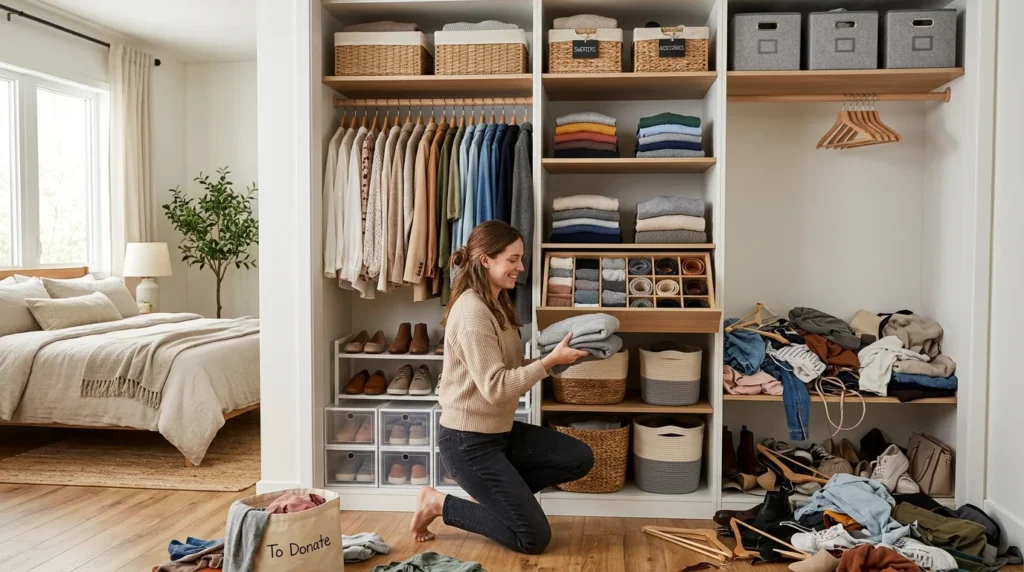
Different homes need different approaches. A Toronto condo bedroom may benefit from compact vertical storage, while a larger suburban bedroom may have enough space for a walk-in arrangement.
| Storage type | Works well for | Main consideration |
| Reach-in | Bedrooms and smaller homes | Make full use of vertical space |
| Walk-in | Larger wardrobes and shared storage | Avoid wasting corners and high shelves |
| Freestanding wardrobe | Rentals and rooms without built-ins | Check floor space and stability |
| Modular wall system | Changing storage needs | Measure carefully before installation |
| Entry storage | Coats, boots, bags, and winter gear | Prioritize durable, easy-access areas |
Choose the simplest format that handles what you own today. Extra compartments can easily become another place for unused items to collect.
How to Organize a Closet in 7 Practical Steps
- Remove everything. Take out clothing, footwear, bags, and loose items so you can see the entire space.
- Edit what you own. Create keep, donate, repair, sell, and discard groups. Deal with unwanted items soon after sorting them.
- Group similar items. Put shirts with shirts, trousers with trousers, and shoes with shoes. Categories make your storage needs easier to understand.
- Measure the empty space. Record the width, depth, height, shelf dimensions, and available hanging length before buying anything.
- Create three access zones. Keep daily items closest, seasonal pieces higher or farther back, and occasional-use items in protected storage.
- Add only useful organizers. Use shelves, rods, hooks, trays, or bins where they solve a specific problem.
- Label hidden storage. A simple label prevents boxes and opaque bins from becoming forgotten storage.
This order matters. Buying baskets before sorting often means organizing things that should have left the room.
Make a Small Space Work Harder
Small Canadian apartments and older bedrooms often benefit more from vertical planning than from additional furniture. Use the area above the hanging rail for items you rarely need. Add hooks to suitable side walls or doors. Slim hangers can also reduce wasted rail space when bulky hangers aren’t necessary. For the full picture, read Coriander vs Cilantro.
Keep the floor as clear as practical. An open floor makes cleaning easier and helps prevent shoes, bags, and laundry from turning into permanent piles. Storage should also visually support the room. LifeVoria’s home decor ideas for Canadian homes show how useful storage, vertical elements, and carefully chosen furniture can make smaller rooms feel calmer.
Plan Around Canadian Seasons
Canadian households often need room for clothing that changes dramatically throughout the year. Heavy coats, boots, scarves, and thick sweaters can dominate storage during winter.
Use a three-zone rotation:
- Current season: Keep items within easy reach and at eye level.
- Next season: Store items on upper shelves, in drawers, or in nearby bins.
- Off-season: Keep items in clean, dry, protected storage outside the busiest area.
Wash or clean items before storing them for long periods, and make sure they are completely dry. Avoid packing damp clothing into closed containers.
For valuable or fragile pieces, use extra care. The Canadian Conservation Institute’s textile-care guidance recommends good air circulation and warns against unsuitable storage conditions for delicate textiles.
Seasonal bedding requires similar planning. LifeVoria’s quilt care and seasonal bedding guide explains how materials, folding, cleaning, and storage can affect different bed coverings.
What Should You Buy First?
A closet system makes sense only after you know what needs to hang, fold, stack, or stay hidden.
Start with the least expensive change that solves your main problem.
| Problem | Try first | Upgrade when needed |
| Wasted hanging height | Second rail | Adjustable modular system |
| Shoes scattered across the floor | Low rack or cubbies | Dedicated shelving |
| Small accessories get lost | Trays or small boxes | Shallow drawers |
| High shelves become messy | Labelled bins | Adjustable shelving |
| A rental needs more storage | Freestanding unit | Built-in system after moving |
Canadian retailers offer everything from inexpensive hanging organizers to modular wall units and full wardrobe systems. Product availability and pricing change, so measure first and compare dimensions instead of shopping by photos alone.
Protect Clothing and Footwear While Storing Them
Organization should make clothing easier to wear, not simply easier to display. Fold heavy knitwear that may stretch on a hanger. Give structured jackets enough room so they aren’t crushed. Keep frequently worn footwear in a place where air can circulate after use.
Check boots and shoes before storing them for a season. Clean off road salt, dirt, and moisture first. Repairs are easier to handle before the damage worsens. If a favourite pair needs professional attention, LifeVoria’s shoe repair guide for Canadian consumers explains common services, typical questions to ask, and when a repair may make sense.
Keep the System Working
A complicated setup rarely stays tidy. Make maintaining your storage system easier than creating a mess. Spend a few minutes each week returning items to their assigned zones. Keep a small donation bag or basket nearby for clothing you decide not to keep.
Do a larger review when the seasons change. Move upcoming seasonal clothing forward, check stored items, and remove anything you no longer use. If one section keeps becoming messy, change the system. Repeated clutter often means the storage method doesn’t match your routine.
Frequently Asked Questions
A reach-in closet or freestanding wardrobe with vertical shelving usually uses limited floor space efficiently. Prioritize double hanging rails, upper shelves, hooks, and compact shoe storage.
A quick review at each major seasonal change works well for many Canadian households. You can move weather-appropriate clothing forward and decide whether stored pieces still deserve space.
They can save space for sturdy, washable items, but they aren’t suitable for every fabric. Avoid compressing valuable, fragile, structured, or delicate pieces without first checking appropriate care guidance.
It can make sense when the existing layout wastes significant space, and you expect to stay in the home for several years. Renters and households with changing needs may get better value from adjustable or freestanding storage.
No. Coordinated containers can make a room look more organized, but function matters more. Choose sizes that fit the space and make stored items easy to identify and reach.