

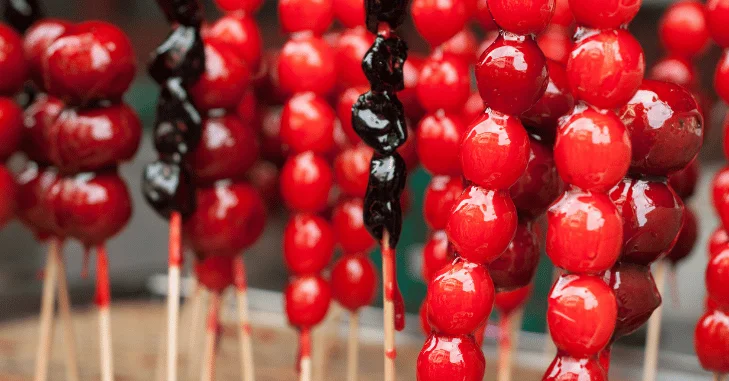
Tanghulu gives fresh fruit a thin, shiny candy shell that cracks with every bite. The classic Chinese snack traditionally uses tart hawthorn berries coated in hardened sugar syrup. Canadian home cooks can recreate it easily with strawberries, grapes, clementines, or other firm fruit.
The technique looks impressive, but the ingredient list is surprisingly short. The biggest challenges are drying the fruit completely and cooking the syrup to the correct temperature. Once those two details are right, the coating sets quickly and stays crisp.
Quick answer: Use completely dry fruit, skewer it, and then cook a two-to-one sugar-and-water mixture to about 150°C (300°F). Dip each skewer quickly, let the extra syrup drain, and cool the coating until hard. A candy thermometer makes the process much more reliable.
| Key detail | What to know |
|---|---|
| Snack | Tanghulu |
| Origin | Traditional Chinese candied-fruit snack |
| Classic fruit | Chinese hawthorn |
| Easy Canadian options | Strawberries, grapes, clementines, blueberries |
| Sugar ratio | About 2 parts sugar to 1 part water |
| Target temperature | About 150°C (300°F) |
| Best texture | Thin, brittle sugar shell with juicy fruit inside |
| Best serving time | Shortly after making |
| Main safety concern | Extremely hot sugar syrup |
What Makes This Chinese Candied-Fruit Snack Different?
Traditional versions come from northern China and are closely associated with hawthorn berries. The tart fruit balances the intense sweetness of the hardened sugar coating. Modern versions also use strawberries, grapes, citrus, pineapple, and other colorful fruits.
The finished coating should resemble thin candy glass rather than sticky syrup. It should crack cleanly when bitten and reveal fresh fruit underneath. That contrast between brittle sugar and juicy fruit explains much of the snack’s appeal.
Social media helped introduce newer versions to audiences outside China. Still, the food itself has a history stretching back centuries. Calling it simply a recent internet trend misses its established place in Chinese food culture.
Ingredients and Equipment You’ll Need
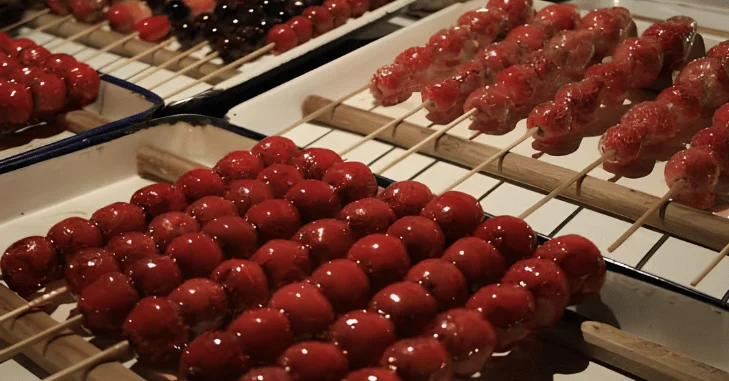
You can find nearly everything at a standard Canadian grocery store. A digital candy thermometer is the one tool that makes the process considerably easier. Choose a small, heavy saucepan because deeper syrup makes dipping easier.
Ingredients
- 400 g granulated white sugar
- 200 mL water
- 12 to 16 strawberries, depending on size
- 20 to 30 seedless grapes, optional
- 2 clementines, optional
- Ice and cold water for testing or rapid cooling
- Bamboo skewers
Equipment
- Small heavy-bottomed saucepan
- Candy or instant-read thermometer
- Baking sheet or large plate
- Parchment paper or silicone mat
- Heat-resistant bowl for cold water
- Clean kitchen towels or paper towels
Fruit must be completely dry before it touches the syrup. Even small droplets can prevent the coating from sticking evenly. Moisture also increases the risk of dangerous splattering around hot sugar.
Which Fruits Work Best in Canada?
Strawberries are one of the easiest choices because they are firm and easy to skewer. Seedless grapes also work well because their smooth skins hold a thin coating. Clementine segments can work, but every trace of surface moisture should be removed first.
Fruit with high surface moisture can be more difficult. Watermelon, very ripe peaches, and soft berries may leak or slide from the skewer. Firm, intact fruit generally gives beginners more predictable results.
For a colorful Canadian dessert table, combine red strawberries with green grapes and orange citrus. Readers who enjoy homemade sweets may also like Lifevoria’s classic butter tarts recipe. Classic butter tarts recipe
How to Make Tanghulu in 7 Steps
The method moves quickly once the syrup reaches hard-crack temperature. Prepare every skewer before heating the sugar. You should also have your cooling surface ready beside the stove.
- Wash and dry the fruit. Rinse everything thoroughly, then dry each piece carefully. Leave the fruit uncovered briefly if any moisture remains.
- Build the skewers. Place two or three larger fruits on each stick. Use several smaller grapes if you prefer lighter skewers.
- Combine sugar and water. Put 400 grams of sugar and 200 milliliters of water into the saucepan. Avoid stirring once the mixture begins heating.
- Cook to the hard-crack stage. Heat the syrup until it reaches about 150°C (300°F). Recipes from Food Network and other established cooking sources use approximately this temperature for a brittle coating.
- Test the syrup if needed. Drop a small amount into very cold water if you lack a thermometer. It should become hard and brittle rather than soft or bendable.
- Dip each skewer quickly. Tilt the saucepan and rotate the fruit through a thin layer of syrup. Let excess sugar drip back into the pan.
- Cool until hard. Place each coated skewer on parchment or a silicone mat. The shell should firm within moments as the sugar cools.
Work carefully because the usable dipping period is short. The syrup keeps cooking after reaching the target temperature. If it turns noticeably amber, the flavor will become more caramel-like.
If you enjoy hands-on baking projects, Lifevoria’s cinnamon bun recipe uses another useful temperature-controlled kitchen process. cinnamon bun recipe It is a good next project for cooks who enjoy learning techniques rather than using complicated ingredients.
Why Your Sugar Coating Is Sticky or Soft
A soft shell usually means the syrup did not reach the hard-crack stage. Sugar cooked below the required temperature can remain chewy instead of becoming brittle. A thermometer removes much of that uncertainty.
Wet fruit causes another common failure. The syrup may slide away, form uneven patches, or soften soon after coating. Drying the fruit thoroughly is therefore as important as measuring the sugar correctly.
Humidity can also affect the finished candy. Hardened sugar readily attracts moisture from the surrounding air. A crisp shell can become tacky faster on humid summer days than during a dry Canadian winter.
Avoid stirring boiling syrup unless the specific recipe requires it. Unnecessary agitation can encourage crystallization along the pot or coating. If crystals form, the finished shell can look cloudy or grainy instead of clear.
How to Make the Shell Thin Instead of Heavy
A thick coating can overpower the fruit and become uncomfortable to bite. Use a narrow saucepan so each skewer can be coated quickly. Rotate the fruit once, then let the excess run back into the pan.
The syrup should be fluid enough to create a thin film. Waiting too long after removing it from the heat makes it thicker. Reheating may help briefly, but repeated heating can darken the sugar.
Smaller skewers are also easier to coat. Two or three strawberries usually give you more control than a long, heavy row. Lighter skewers also reduce the chance of fruit slipping into the hot syrup.
Hot-Sugar Safety Matters
Melted sugar can cause serious burns because it reaches temperatures far above boiling water. It can also stick to skin, which can worsen an injury. Hospitals have warned about burns linked to people attempting viral candied-fruit recipes without enough caution.
Keep children away from the saucepan and dipping area. Wear closed shoes, use stable cookware, and keep the pot handle turned away from the counter edge. Never touch the syrup to test whether it has cooled.
If you spill hot sugar, focus first on personal safety rather than cleaning the counter. Do not scrape hardened sugar from a saucepan with force. Adding water and gently reheating usually dissolves leftover candy more safely.
How Long Does the Candy Stay Crisp?
These skewers are best eaten soon after the coating hardens. Fresh fruit contains water, while the sugar shell performs best when it stays dry. Over time, those two properties work against each other.
A refrigerator can protect the fruit from prolonged room-temperature storage, but condensation may soften the candy coating. Humid air can create the same problem. For the strongest crack, make only as much as you expect to serve soon.
Avoid preparing a large batch a day ahead for a party when texture matters. Instead, wash and dry the fruit beforehand, then coat it closer to serving time. That approach gives guests a noticeably crisper result.
For more Canadian-friendly sweet ideas, Lifevoria’s guide to Canadian candy covers familiar chocolate bars and packaged favorites. guide to Canadian candy It can help round out a dessert table with both homemade and store-bought treats.
Simple Variations to Try
Start with one type of fruit until you understand the sugar stage. Strawberries offer a familiar sweet-tart balance, while green grapes give a firmer bite. Mandarin segments add stronger acidity but require careful drying.
You can also combine colors on a single skewer. Keep individual pieces close in size so the coating reaches them evenly. Avoid adding wet sauces, syrups, or toppings before the sugar sets.
The most useful variation is often a change in fruit rather than more ingredients. The basic sugar shell already provides plenty of sweetness. Tart or mildly acidic fruit usually creates the strongest contrast.
Frequently Asked Questions
What is tanghulu?
Tanghulu is a traditional Chinese snack made from skewered fruit covered in hardened sugar syrup. Chinese hawthorn is the classic fruit, especially in northern China. Modern versions often use strawberries, grapes, citrus, and other firm fruits.
Can I make it without a candy thermometer?
Yes, but a thermometer makes the result more consistent. Drop a little syrup into cold water and check whether it becomes brittle immediately. If it bends or stays soft, continue cooking.
Why did my coating turn sticky?
The syrup may not have reached hard-crack temperature. Moist fruit and humid air can also soften the shell. Check all three factors before changing the sugar ratio.
Can I use frozen fruit?
Fresh fruit is a better choice for this method. Frozen fruit releases considerable moisture as it thaws. That water makes it difficult to keep the candy coating crisp.
Do I need corn syrup?
No, a basic version can use only granulated sugar and water. Some recipes add corn syrup to reduce crystallization and encourage a clear coating. A simple sugar-and-water mixture still works when the temperature is controlled carefully.
Is it safe for children to make?
Children can help wash, dry, and skewer fruit under supervision. An adult should handle the boiling sugar and dipping stage. Syrup around 150°C can cause serious burns on contact.
Make It Fresh and Keep the Method Simple
The strongest results come from careful preparation rather than extra ingredients. Dry the fruit completely, measure the syrup accurately, and use a thermometer when possible. Serve the skewers soon after the shell hardens for the cleanest crack.
Canadian grocery stores offer plenty of suitable fruit throughout the year. Strawberries and grapes are particularly beginner-friendly choices. Once you understand the sugar stage, you can experiment with citrus and other firm seasonal fruit.