

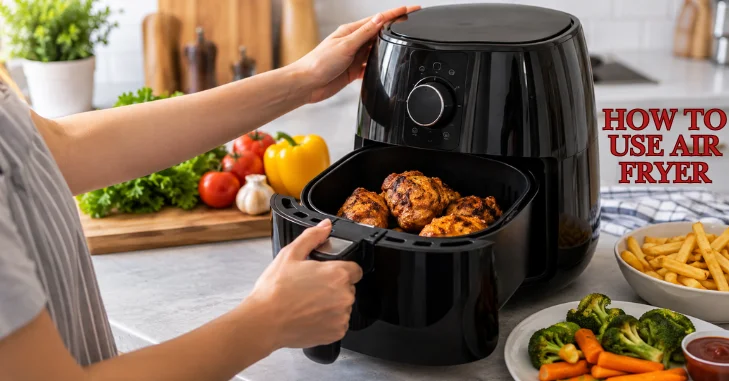
Learning how to Use Air Fryer controls is easier once you understand the basics. Prepare the food, leave enough space for hot air to circulate, select the right time and temperature, and check the food before the timer ends. An air fryer works much like a compact convection oven, using rapidly moving heated air to cook and brown food.
That simple method works for frozen fries, vegetables, chicken, fish, snacks, and many leftovers. Cooking settings vary by appliance and food, so your model’s manual and a tested recipe should guide your first attempt. Once you understand how quickly your machine cooks, adjusting future batches becomes much easier.
| How to Use Air Fryer | Practical answer |
|---|---|
| Do you always need to preheat? | No. Follow your model manual and recipe because recommendations vary. |
| Do you need oil? | Often only a small amount, and some foods need none. |
| Should food be stacked? | A loose layer usually gives better airflow and browning. |
| Should you flip or shake food? | Usually, especially for fries, vegetables, and breaded foods. |
| How do you check meat safely? | Use a digital food thermometer rather than judging by color. |
| Can you use parchment paper? | Only when your appliance and liner instructions allow it. |
| When should you clean the basket? | After it cools, ideally after each cooking session. |
Quick answer: Put the appliance on a heat-safe surface, arrange food loosely in the basket, and choose the recipe’s recommended time and temperature. Shake or turn food partway through cooking, check it a few minutes early, and use a food thermometer when safe internal temperature matters.
What You’ll Need Before You Start
You don’t need many accessories to begin. Keep the appliance manual nearby, along with heat-safe tongs or a silicone utensil and a digital food thermometer if you plan to cook meat, poultry, seafood, or leftovers. A mixing bowl is also useful for lightly coating vegetables or potatoes with oil and seasoning.
Place the appliance on a flat, dry, heat-resistant surface with adequate space around its vents. Remove packaging materials before the first use and wash removable food-contact parts as directed by the manufacturer. Never operate a unit with a damaged cord, unusual sparking, or signs of an electrical fault.
How to Use Air Fryer in 7 Simple Steps
- Prepare the food. Pat ingredients dry when surface moisture could interfere with browning. Season the food and add only the amount of oil your recipe needs.
- Check whether preheating is required. Some models recommend a short preheat, while others can begin cooking immediately. Follow your appliance manual rather than assuming every machine works the same way.
- Load the basket loosely. Leave room for heated air to move around the food. Two smaller batches often cook more evenly than one tightly packed basket.
- Set the temperature and timer. Start with your recipe, package directions, or manufacturer guidance. Remember that food thickness and basket size can affect cooking time.
- Shake or turn the food. Fries, vegetables, nuggets, and other small pieces often benefit from a shake partway through cooking. Turn larger pieces with tongs when both sides need direct exposure to the circulating air.
- Check doneness early. Inspect the food a few minutes before the suggested cooking time ends because compact appliances can brown food quickly. Use a digital thermometer whenever you must confirm a safe internal temperature.
- Remove the food and clean up. Use heat-safe utensils because the basket and tray can remain hot after cooking. Let removable parts cool before washing them, following the manufacturer’s instructions.
The buttons and presets differ between brands, but the basic cooking process stays similar. Your first few batches help you learn whether your machine runs hotter or faster than a recipe suggests. Write down successful settings for foods you make regularly so you have a reliable starting point next time.
Do You Need to Preheat an Air Fryer?
Preheating is not mandatory for every model, recipe, or food. Some manufacturers recommend it, while other appliances include automatic preheating or are designed to start from cold. The appliance manual should be your first reference because its instructions match your heating system.
A short preheat may help when you want immediate surface browning, especially with foods that benefit from a crisp exterior. Starting without preheating may mean you need to add a little cooking time instead. Compare both methods with foods you prepare often and keep whichever approach gives you better results.
How Much Oil Should You Use?
An air fryer doesn’t need a container of cooking oil because hot air does most of the cooking. A small amount of oil can help potatoes, fresh vegetables, and some breaded foods brown more evenly. Naturally fatty foods and many frozen prepared products may need no extra oil.
Coat the food lightly instead of automatically covering the basket with oil. Too much can make food greasy and may contribute to smoke when excess fat collects below the basket. Check your manual before using aerosol cooking sprays, because recommendations can differ by basket material and non-stick coating.
Time and Temperature: Start With the Food, Then Adjust
Cooking charts can give you a starting point, but they cannot account for every appliance or ingredient. Basket size, food thickness, starting temperature, moisture, and the amount of food being cooked can all change the timing. Check unfamiliar foods early until you understand how your particular model performs.
| Cooking situation | Good beginner approach |
|---|---|
| Frozen packaged food | Check the package for air-frying directions first. |
| Fresh vegetables | Use a light coating of oil if desired and shake during cooking. |
| Fries and potatoes | Avoid crowding and shaking during cooking. |
| Breaded foods | Leave space between pieces and turn if needed. |
| Meat and poultry | Follow tested guidance and verify the center with a thermometer |
| Leftovers | Heat until hot throughout and check temperature when food safety requires it. |
| A new recipe | Inspect several minutes before the suggested finishing time. |
Potatoes are a useful food for learning how airflow and moisture affect crispness. LifeVoria’s crispy poutine recipe explains why drying potatoes and managing their surface moisture can improve texture. The recipe uses traditional frying, but its potato-preparation lessons can help you understand why wet or crowded potatoes struggle to become crisp.
Use Safe Internal Temperatures in Canada
A browned exterior does not prove that meat or poultry is safely cooked inside. Use a digital food thermometer in the thickest part of the food, and avoid touching bone when you take the reading. When you cook several separate pieces, checking more than one piece gives you greater confidence that the entire batch is ready.
| Food | Recommended minimum internal temperature |
|---|---|
| Poultry pieces, including chicken breasts and thighs | 74°C (165°F) |
| Ground poultry | 74°C (165°F) |
| Frozen raw breaded chicken products | 74°C (165°F) |
| Ground beef, pork, veal, or lamb | 71°C (160°F) |
| Pork pieces and whole cuts | 71°C (160°F) |
| Fish | 70°C (158°F) |
| Egg dishes | 74°C (165°F) |
| Leftovers | 74°C (165°F) |
Wash the thermometer after it touches raw food to prevent bacteria from transferring to cooked food or other surfaces. Keep raw and cooked ingredients on separate plates or cutting boards during preparation. Refrigerate perishable leftovers promptly instead of leaving them at room temperature for too long.
Common Beginner Mistakes That Affect Crispness
Crowding is one of the easiest ways to end up with food that browns in some places and stays soft in others. Hot air needs exposed surfaces and open pathways around the ingredients to cook effectively. Reducing the amount of food in each batch is often more effective than adding extra minutes to an overcrowded basket.
| Mistake | What can happen | Better approach |
|---|---|---|
| Packing the basket tightly | Uneven or soft surfaces | Cook a smaller batch. |
| Using too much oil | Greasiness or extra smoke | Coat food lightly. |
| Never shaking or flipping | One side browns more. | Turn food partway through. |
| Trusting color for meat | Unsafe food may look done. | Check internal temperature. |
| Using identical timing for every model | Food may burn or stay underdone. | Check early and adjust. |
| Ignoring grease and crumbs | Odors and smoke can build | Clean after cooling |
| Using loose liners incorrectly | Airflow can be blocked. | Follow appliance instructions. |
Surface moisture can cause similar problems with vegetables, potatoes, and breaded foods. Pat wet ingredients dry before seasoning so the exterior has a better chance to brown instead of steam. Loose wet batters can also drip through basket openings, so dry crumb coatings are often easier for beginners to manage.
Be Careful With Parchment Paper and Liners
Don’t assume every oven-safe liner can be used in this appliance. Lightweight paper may move when powerful air circulates through the basket, and a loose sheet can interfere with airflow or get too close to a heating element. Always check the instructions for both your appliance and the liner before putting paper inside.
If liners are permitted, make sure food holds the material securely in place while the machine operates. Never preheat an empty basket with a loose sheet of paper unless the manufacturer specifically says that method is safe. For more detail on materials and heat limits, LifeVoria’s parchment paper safety guide explains how parchment differs from wax paper, foil, and other kitchen liners.
How to Clean Your Air Fryer
Let the appliance cool before you begin cleaning it. Remove the basket, rack, or tray as directed in the manual, and wash each removable component using the approved method. Wipe the main appliance body rather than immersing any electrical housing, cord, or plug in water.
Grease and crumbs can collect underneath removable racks, so inspect areas that are easy to miss. Regular cleaning helps prevent stale odors, stuck-on residue, and smoke during later cooking sessions. Dry all washable parts completely before reassembling the appliance or storing it.
Reheating Leftovers Without Making Them Soggy
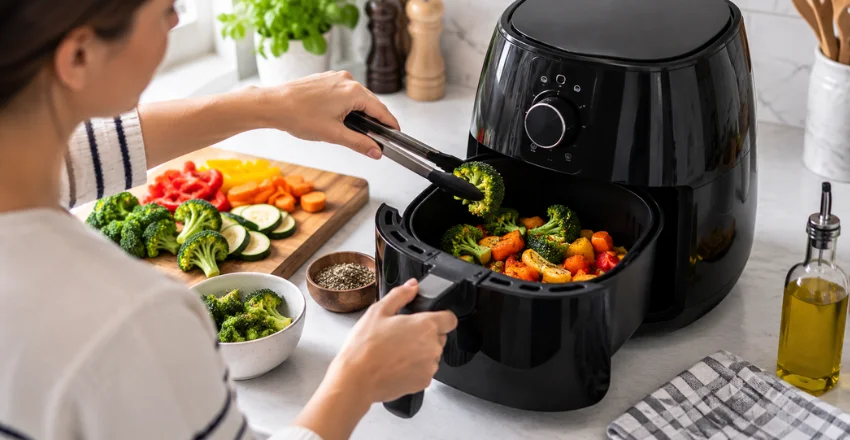
Circulating dry heat can help restore texture to pizza, fries, roasted vegetables, breaded foods, and other leftovers that become soft in a microwave. Start at a moderate temperature and check the food often, since cooked ingredients can dry out quickly during reheating. When food safety requires it, verify that the center reaches the appropriate reheating temperature.
Meal-prep foods can also benefit from gentle heating plus a short crisping stage. LifeVoria’s breakfast burrito recipe covers storing and reheating a prepared meal containing eggs, sausage, potatoes, vegetables, and cheese. The same principle applies here: heat the center safely while watching the exterior so it doesn’t dry out or overcook.
Start With One Simple Batch
The easiest way to get comfortable with the appliance is to make one simple dish and watch how it cooks. Leave room around the ingredients, check the basket before the timer ends, and record any time or temperature adjustment you would make next time. After a few batches, you will have settings that suit both your favorite foods and your particular machine.
Keep food-safety requirements separate from preferences about color and crispness. Use a thermometer when internal temperature matters, clean the basket regularly, and follow your model’s instructions for accessories and preheating. Those habits make everyday air frying simpler, safer, and more consistent.
Frequently Asked Questions
How to use an air fryer for the first time?
Wash removable food-contact pieces as directed, place the appliance on a safe counter, and learn the controls before loading your first batch. Choose a simple food, such as frozen fries or vegetables, so you can inspect and adjust it easily. Check the basket before the timer ends to see how quickly your model cooks.
Do I need to preheat every time?
No, preheating depends on the appliance, recipe, and result you want. Some models recommend it, while others work well from a cold start or include automatic preheating. Follow the manufacturer’s directions first, then compare your own results with foods you prepare regularly.
Can I put foil or parchment paper inside?
You can use some liners in some machines, but only when the appliance manufacturer and liner instructions permit them. The material should not obstruct necessary airflow or sit loosely where it could move toward a heating element. A liner being oven-safe does not automatically mean it is appropriate for every air-frying setup.
Why is my food not getting crispy?
Too much food, excess surface moisture, too little airflow, or insufficient heat can all reduce browning. Try a smaller batch, pat wet foods dry, and shake or turn the food during cooking. If the exterior still stays pale, adjust the temperature or cooking time gradually rather than making several changes at once.
What is the easiest food for a beginner?
Frozen fries, potato wedges, vegetables, nuggets, and similar foods with straightforward cooking directions are good learning choices. They let you practise loading the basket, shaking food, checking browning, and adjusting time without a complicated recipe. Once those steps feel familiar, move on to proteins, fresh meals, and foods that require more careful temperature checks.