
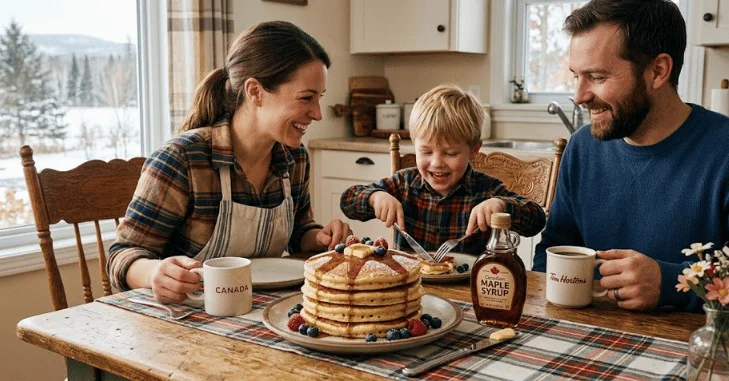
A warm stack of buttermilk pancakes is hard to beat on a slow Canadian morning, especially with butter, berries, and pure maple syrup. The right batter should cook up tender inside, lightly golden outside, and tall enough to feel substantial without becoming cakey. This recipe uses everyday ingredients, Canadian-friendly measurements, and simple cooking cues that remove much of the guesswork.
Quick answer: To make a fluffy stack, whisk the dry and wet ingredients separately, combine them only until the flour disappears, and rest the batter for five minutes. Cook 60 mL portions on a preheated skillet over medium-low heat, then flip when bubbles rise and the edges begin to set.
Recipe at a Glance
| Recipe detail | What to know |
|---|---|
| Prep time | About 10 minutes |
| Batter rest | 5 minutes |
| Cook time | About 15–20 minutes |
| Total time | About 30–35 minutes |
| Yield | About 12–14 medium pancakes |
| Portion size | About 60 mL (1/4 cup) batter each |
| Cooking heat | Medium-low to medium |
| Main leaveners | Baking powder and baking soda |
| Classic topping | Butter and pure Canadian maple syrup |
| Make-ahead | Cooked portions can be refrigerated or frozen |
What You’ll Need
The ingredient list is short, but each part has a job. Buttermilk supplies moisture, acidity, and a mild tang, while baking soda and baking powder help the batter rise. Melted butter adds richness, and a modest amount of sugar helps the surface develop a golden colour.
Ingredients
- 250 g (2 cups) all-purpose flour
- 25 g (2 tablespoons) granulated sugar
- 10 mL (2 teaspoons) baking powder
- 5 mL (1 teaspoon) baking soda
- 2 mL (1/2 teaspoon) fine salt
- 500 mL (2 cups) cultured buttermilk
- 2 large eggs
- 5 mL (1 teaspoon) vanilla extract
- 45 mL (3 tablespoons) unsalted butter, melted and cooled slightly
- Extra butter or neutral oil for the skillet
- Pure maple syrup, berries, bananas, or other toppings for serving
Measure the flour without packing it tightly into the cup because excess flour can make the batter heavy. If you use a kitchen scale, the gram measurement gives you a more consistent starting point. Keep the melted butter warm enough to stay liquid, but let it cool slightly before mixing it with the eggs.
How to Make Buttermilk Pancakes Fluffy Every Time
The main goal is to create an airy batter without developing too much gluten. A few small lumps are fine, and they are often preferable to a perfectly smooth mixture stirred too long. Keep your pan temperature steady so the centres have time to cook before the outside darkens.
- Mix the dry ingredients. Whisk the flour, sugar, baking powder, baking soda, and salt in a large bowl. Break up any visible clumps before adding liquid.
- Combine the wet ingredients. In a second bowl, whisk the buttermilk, eggs, vanilla, and melted butter. Mix until the eggs are evenly incorporated.
- Bring the batter together. Pour the wet mixture into the dry ingredients. Fold gently with a spatula until no dry pockets of flour remain.
- Rest for five minutes. Leave the bowl on the counter while you preheat the skillet. A short rest gives the flour time to absorb moisture without delaying cooking.
- Preheat the pan. Set a non-stick skillet or griddle over medium-low to medium heat. Add a thin coating of butter or neutral oil once the surface is evenly warm.
- Cook the first side. Add about 60 mL (1/4 cup) of batter for each portion. Cook until bubbles appear across the surface and the outer edge loses its wet shine.
- Flip once. Turn each portion gently and cook the second side until golden. Transfer the finished batch to a warm plate while you cook the remaining batter.
Avoid pressing the stack with your spatula after flipping because that pushes out steam and trapped air. If the outside browns before bubbles appear on top, lower the heat for the next batch. If the batter spreads immediately into a thin circle, check your measurements before adding extra flour.
Why Buttermilk Changes the Texture
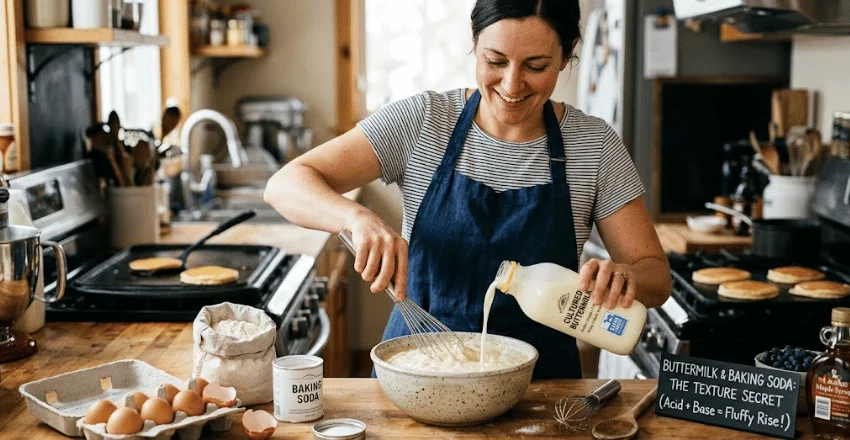
Cultured buttermilk is acidic, which makes it especially useful in a batter containing baking soda. When the acid and baking soda meet, they help produce carbon dioxide that contributes to lift. The dairy also brings a gentle tang that balances sweet toppings such as maple syrup or fruit.
Modern cultured buttermilk differs from the liquid traditionally left after churning butter, but both names have remained part of home cooking. Dairy Farmers of Canada describes current commercial versions as milk made tangy through bacterial cultures. Its Canadian pancake guidance also pairs cultured dairy with baking soda and recommends stirring only briefly.
What if you don’t have buttermilk?
A quick substitute can rescue breakfast without another grocery trip. For 500 mL of substitute, place 30 mL of white vinegar or lemon juice in a measuring jug, then add milk until the total reaches 500 mL. Let the mixture stand for several minutes before adding it to the batter.
Dairy Farmers of Canada recommends the same basic acid-and-milk approach for replacing cultured buttermilk. The substitute can produce a good result, although real cultured dairy usually provides a fuller tang and thicker consistency. If the substitute looks thinner than expected, avoid compensating with large amounts of extra flour.
Get the Pan Heat and Flip Timing Right
Medium heat is a starting point, not a fixed rule, because stovetops and pans behave differently. Canadian Living advises testing the temperature and adjusting it to achieve an even golden colour, which is more useful than relying on a dial number alone. The first pancake can act as your temperature check before you cook a full batch.
Watch the batter rather than the clock once cooking begins. Small bubbles should appear on top, while the edge should look less glossy and slightly set before you flip. If the surface turns dark before those cues appear, reduce the heat and let the pan cool for a moment.
Common Problems and Simple Fixes
Most disappointing batches come from mixing, heat, or measurement problems rather than a complicated recipe failure. Use the batter’s appearance and the first cooked portion to make small adjustments. Changing several ingredients at once makes it harder to identify what went wrong.
| Problem | Likely cause | What to do next |
|---|---|---|
| Flat pancakes | Batter overmixed, or leaveners are old | Stir less and check baking powder and soda |
| Dark outside, raw centre | Pan is too hot | Reduce heat before the next batch |
| Dense texture | Too much flour or heavy mixing | Measure flour carefully and fold gently |
| Batter spreads too much | Mixture is unusually thin | Recheck liquid measurements and let it rest |
| Pale surface | Pan is too cool | Raise the heat slightly |
| Tough texture | Batter was stirred until completely smooth | Stop mixing while a few small lumps remain |
Resist adding flour after one imperfect first pancake unless the batter is clearly too thin. Heat often causes more trouble than batter consistency, especially with heavy pans that continue getting hotter between batches. Adjust the burner first and see how the second portion cooks before changing the mixture.
Canadian Serving Ideas for a Weekend Breakfast
Butter and pure maple syrup make the simplest pairing, but fresh berries add acidity and colour without much extra work. Sliced banana, toasted pecans, apple compote, plain Greek yogurt, or a spoonful of berry preserves also work well. For a bigger spread, add eggs, breakfast potatoes, or fruit alongside the sweet stack.
If you enjoy planning a full weekend meal, Lifevoria’s Montreal brunch guide offers more inspiration for sweet and savoury brunch combinations. For a portable weekday alternative, the breakfast burrito recipe is designed around Canadian grocery-store ingredients and make-ahead preparation. You can also finish a Canadian-themed meal with Lifevoria’s classic butter tarts recipe.
Make Ahead, Store, and Reheat
Cooked portions are easy to prepare in advance, which is useful when weekday mornings move faster than weekend brunch. Let them cool before refrigerating so trapped steam doesn’t soften the surface too much. Store in a clean, covered container once cooled.
For convenient reheating:
- Refrigerate leftovers promptly after cooling.
- Place parchment between layers before freezing to make individual portions easier to separate.
- Reheat refrigerated portions in a toaster, skillet, microwave, or low oven.
- Warm only the amount you plan to eat.
- Add syrup and fresh fruit after reheating, not before storage.
Health Canada advises eating refrigerated leftovers within two to three days or freezing them for later. It also recommends using clean containers and refrigerating food promptly after it has cooled enough to stop steaming. For freezer organization, Lifevoria’s parchment paper guide explains practical uses for separating and storing foods.
Frequently Asked Questions
Can I make buttermilk pancakes without buttermilk?
Yes, you can use a homemade sour-milk substitute if cultured buttermilk is not available. Add lemon juice or white vinegar to milk, let it stand briefly, and measure the amount your recipe requires. The flavour may be slightly less tangy, but the acid still gives baking soda something to react with.
Should pancake batter rest before cooking?
A short five-minute rest is useful because the flour has time to absorb the liquid before it reaches the pan. It also gives you enough time to preheat your skillet evenly. You don’t need to leave the batter sitting for long because the leaveners start working as soon as the wet and dry ingredients meet.
Why are my pancakes flat instead of fluffy?
Overmixing is a common cause because repeated stirring develops more gluten and removes some trapped air. Old baking powder or baking soda can also reduce the rise, while an overly thin batter spreads before it has time to puff. Start with gentle mixing and accurate measurements before changing the ingredient ratios.
Can I freeze cooked pancakes?
Yes, you can freeze cooked portions once they have cooled completely. Separate them with parchment so you can remove one or two without thawing the entire batch. Reheat directly from frozen in a toaster or microwave, or warm them gradually in a skillet over low heat.
What should I serve with them in Canada?
Pure maple syrup is the classic choice, and fresh berries make an easy addition during their local season. You can also serve the stack with apples, bananas, yogurt, nuts, eggs, or breakfast potatoes. Choose one sweet topping and one fresh or savoury side for a more balanced brunch plate.
Make Your Next Breakfast Worth Sitting Down For
The difference between a tender stack and a dense one often comes down to simple technique, not extra ingredients. Measure carefully, mix lightly, control the pan temperature, and use visible flip cues instead of rushing the first side. Once you know those signals, the same method becomes easy to repeat for family breakfasts and weekend brunches.
Start with the basic version the first time so you can learn how the batter behaves on your stove. On later mornings, add blueberries, sliced banana, warm spices, or chopped nuts without changing the core method. Keep the maple syrup nearby, pour the coffee, and serve each batch while it is still warm.